Historic Milestone: Greece Successfully Launches First National Optical Microsatellite Into Orbit

Aderson Aiden
July 29, 2026
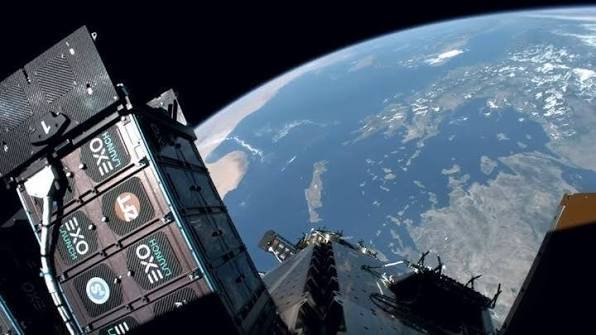
Greece achieved a major milestone in space technology today. Consequently, the successful Greece optical microsatellite space launch establishes the nation’s first independent orbital Earth-observation asset. The high-resolution satellite lifted off aboard a SpaceX Falcon 9 rocket from Vandenberg Space Force Base in California. Therefore, Greek defense, environmental, and maritime agencies will soon receive real-time satellite imagery directly from low-Earth orbit. Meanwhile, government leaders celebrated the orbital deployment as a turning point for national technological sovereignty.
Cutting-Edge Earth Observation Strengthens National Security
The primary payload features advanced optical sensors capable of delivering high-precision terrestrial imagery. Furthermore, the spacecraft will monitor wildfires, track maritime traffic, and support climate change adaptation across the Aegean basin. Reporting from ground stations near Athens, engineers confirmed receiving initial telemetry signals right on schedule.
Meanwhile, digital governance ministers highlighted the long-term strategic value of sovereign orbital infrastructure.
“Today, Greece enters a new era in space technology. Having our own national satellite capability gives us vital tools to protect our environment, manage civil protection during natural disasters, and secure our borders.”
— Dimitris Papastergiou, Minister of Digital Governance of Greece
Ultimately, this orbital achievement transforms local disaster response and coastal surveillance operations. Fire service commanders will receive rapid thermal and optical updates during summer forest fires. Moreover, coast guard units will gain enhanced visibility over critical maritime shipping corridors.
Technical Capabilities Behind the Greece Optical Microsatellite Space Launch
Aerospace engineers designed the compact satellite to support rapid data transmission to national ground stations. Indeed, optical instruments can capture fine surface details across agricultural, urban, and coastal zones. Nevertheless, maintaining reliable communication links requires continuous coordination with European space tracking networks. Specifically, the success of the Greece optical microsatellite space launch reflects growing European investment in small-satellite constellations.
Currently, the Greek Ministry of Digital Governance plans to deploy additional microsatellites over coming years. These upcoming missions aim to build a fully integrated multi-sensor satellite network. Because of these expanded capabilities, Greece reduces its reliance on third-party commercial imagery providers. As a result, public safety agencies can respond faster during emergencies.
For further analysis on European aerospace initiatives, explore our Space Technology Reports. Alternatively, read about regional environmental monitoring under European Infrastructure Analysis.
Building Sovereign Space Infrastructure for Europe
European Space Agency officials commended Greece for expanding its domestic space industry ecosystem. Additionally, local Greek technology startups and university labs contributed directly to software and hardware components. Officials emphasize that small-satellite infrastructure provides cost-effective pathways for mid-sized nations to access space. We also observe growing regional alignment around shared European satellite security frameworks.
Without independent Earth observation assets, nations remain exposed to critical intelligence gaps. Consequently, Greece’s successful launch sets a strong precedent for Mediterranean space initiatives.
Key Takeaways
| Indicator | Impact Details |
| Primary Event | Greece launched its first sovereign optical microsatellite into low-Earth orbit. |
| Launch Vehicle | Deployed aboard a SpaceX Falcon 9 rocket from Vandenberg Space Force Base. |
| Core Applications | Real-time monitoring of wildfires, coastal maritime security, and urban planning. |
Sources
- Greek City Times –Greece Launches First Sovereign Microsatellite Into Orbit
- Defence Redefined –Greece Enters New Space Era With Successful Microsatellite Orbiting
- Ekathimerini –Greece’s First Optical Microsatellite Deployed in Orbit Following Falcon 9 Launch