CEASEFIRE HANGING BY A THREAD: Vance Warns Iran — “We Honored It. Violence Will Be Met With Violence.”

Jubayer Alam
June 27, 2026
WASHINGTON / MANAMA / TEHRAN — The fragile ceasefire between the United States and Iran is hanging by the thinnest of threads this weekend, after a 72-hour firestorm of drone strikes, military retaliations, and duelling accusations of treaty betrayal left the hard-won peace deal signed just eleven days ago on the verge of complete collapse.
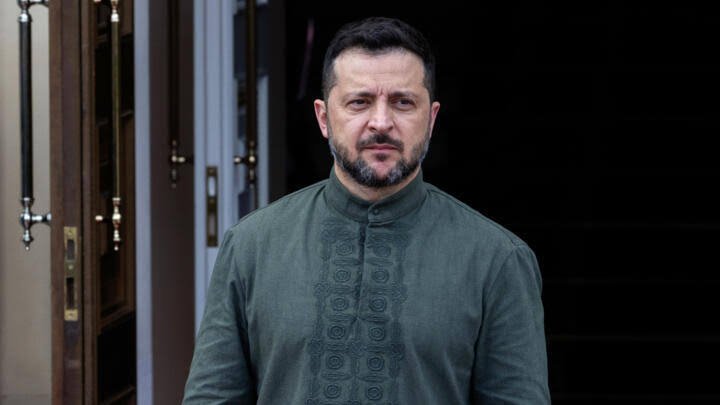
Vice President JD Vance — the man who has led U.S. negotiations with Tehran from the beginning — delivered his bluntest warning yet to Iran on Friday night, posting on social media with the directness of someone who has run out of patience:
“Iran signed a ceasefire agreement. We have honored it. If they have disagreements about how the MOU is being applied, they can pick up the phone. But violence will be met with violence.”
It was a statement that left no room for diplomatic ambiguity. The United States, Vance declared, has kept its word. Iran, in Washington’s view, has not. And the consequences of continuing down that road will be severe.
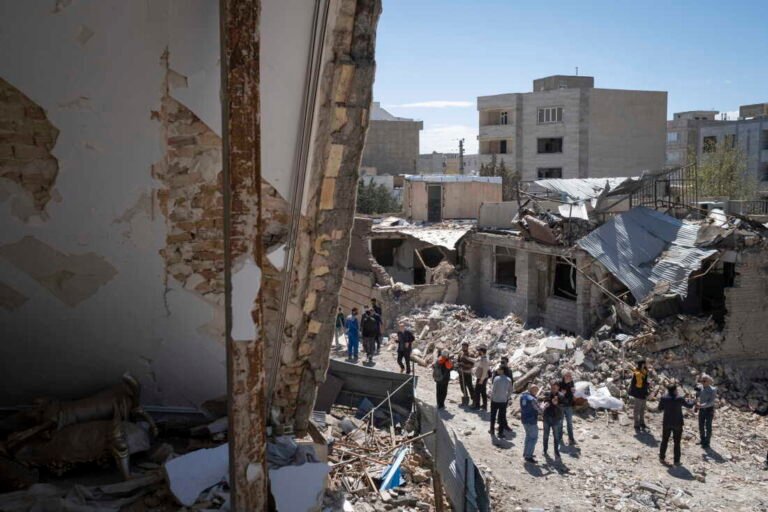
The warning came after one of the most volatile 72-hour periods since the memorandum of understanding (MOU) was signed on June 17 — a period in which Iran struck a cargo ship, the U.S. bombed Iranian military sites, Iran launched drones at Bahrain, another ship came under fire in the Strait of Hormuz, and peace talks in Switzerland were thrown into profound uncertainty.
The question that now hangs over Washington, Tehran, and every capital in the world watching this drama unfold is brutally simple: Can this ceasefire survive?
The Deal That Was Supposed to End the War
To understand how grave the current moment is, it is necessary to recall what the June 17 memorandum of understanding was meant to accomplish — and how much was at stake in getting it signed.
The MOU, signed by President Trump and Iranian President Masoud Pezeshkian after months of gruelling diplomacy mediated primarily by Pakistan and Qatar, was supposed to mark the beginning of the end of a four-month war that began on February 28 when the United States and Israel launched a joint military operation against Iran. The strikes killed Supreme Leader Ali Khamenei and dozens of top Iranian officials, triggering an Iranian retaliation that closed the Strait of Hormuz — the chokepoint through which roughly 20% of the world’s seaborne oil passes — and sent missiles and drones across the Middle East.
The human and economic toll had been catastrophic. The International Energy Agency described the Strait of Hormuz closure as the “largest supply disruption in the history of the global oil market.” The World Bank cut its 2026 global growth forecast to 2.5% — the lowest since COVID-19. Oil prices had surged past $120 per barrel at their peak. The Pentagon’s operational costs for the war had exceeded $29 billion.
The MOU established a 60-day ceasefire window for negotiating a final, comprehensive deal. Its key provisions included the reopening of the Strait of Hormuz to commercial shipping with no tolls, a commitment from both sides to cease offensive military operations, and the beginning of formal talks on Iran’s nuclear programme. Vance, returning from the Lake Lucerne Summit in Switzerland where the agreement was formalised, described it as a historic moment and said both sides were honouring their commitments.
“Iran signed a ceasefire agreement. We have honored it,” Vance wrote. The operative word, it turned out, was past tense.
72 Hours That Shook the Deal
June 25 — Iran Hits the Ever Lovely
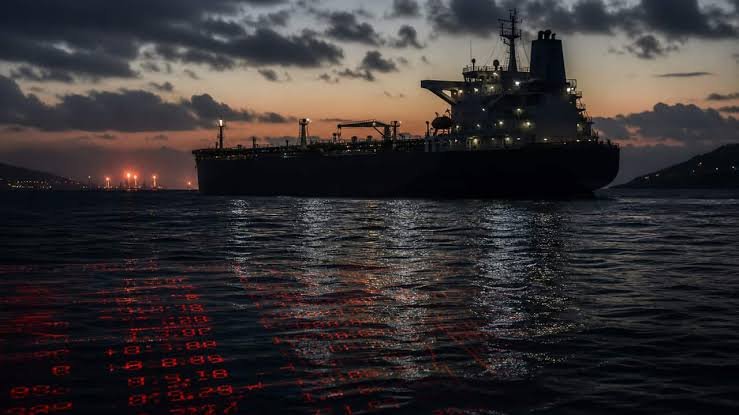
The ceasefire’s most serious test arrived on June 25, when Iran’s Islamic Revolutionary Guard Corps launched attack drones at ships navigating the Strait of Hormuz. One drone struck the M/V Ever Lovely, a Singapore-flagged cargo ship exiting the Strait along the Omani coast — a route that U.S. forces had established and painstakingly cleared of Iranian sea mines. The ship’s upper deck was damaged, but its engines and navigation systems remained operational and no crew members were injured.
President Trump, furious, took to Truth Social immediately. “Obviously, this is a foolish violation of our Ceasefire Agreement,” he wrote. “One of the Drones solidly hit the upper deck of a large and very expensive Cargo Carrying Ship. Damage was done, but the Ship was able to proceed on its way. We knocked down three other Drones.”
The ship attack exposed the rawest nerve in the entire ceasefire arrangement: the dispute over who controls the Strait of Hormuz. Iran has consistently refused to recognise the Omani coastal shipping corridor that the U.S. and U.N. established, insisting all vessels must seek its permission to transit via routes it controls. Iran’s Deputy Foreign Minister Kazem Gharibabadi was unambiguous: “Safe passage through the Strait of Hormuz, with ambiguous arrangements, parallel routes, or decision-making outside of Iran’s considerations as the coastal state, cannot be guaranteed.”
June 26 — America Strikes Back
The United States responded the following day. U.S. Central Command confirmed that six American aircraft struck four targets along the Iranian coastline — missile and drone storage facilities and coastal radar installations. CENTCOM called Iran’s attack “unwarranted aggression” that “clearly violated the ceasefire” and “undermined freedom of navigation.”
It was the first U.S. offensive strike against Iran since a two-week pause that had held since June 11 — and it was precisely calibrated. Officials described the scope as large enough to send a strong message, but limited enough to avoid completely derailing the diplomacy. The word used in one briefing was “course correction.”
That same evening, Vance posted his now-famous warning: Iran signed the agreement. The U.S. has honored it. Pick up the phone — or face the consequences.
June 27 — Iran Targets Bahrain. Another Ship Hit.
Hours after the U.S. strikes, Iran escalated. The IRGC launched drones targeting U.S.-linked military positions in Bahrain — home to the U.S. Navy’s powerful Fifth Fleet. Bahrain’s Foreign Ministry condemned the attack as “a flagrant violation of its sovereignty” and “a blatant breach of international norms.” Minor structural damage was reported, with no casualties.
Separately, the UK Maritime Trade Operations Centre reported a commercial tanker in the Strait of Hormuz had been struck by an unidentified projectile on Saturday. The vessel sustained damage to its bridge. All crew were reported safe. A second ship hit in two days.
The IRGC, in a statement, justified its actions: “Following the violation of the ceasefire by the Zionist regime in southern Lebanon, a few hours ago, the treaty-breaking US regime, as always, violated its commitments and, under various pretexts, attacked the coasts of the Islamic Republic of Iran.”
The exchange of strikes, accusations, and counter-strikes had become its own self-sustaining cycle. The ceasefire’s survival suddenly seemed very much in doubt.
The Blame Game: Two Sides, Two Realities
At the core of this crisis is a fundamental — and possibly irreconcilable — disagreement over what the MOU actually says and means.
Washington’s position is clear and consistent: the Strait of Hormuz is an international waterway. Commercial ships have the right to transit it freely. Attacking them is a ceasefire violation, full stop. The U.S. has honoured its side — it lifted the naval blockade of Iranian ports, it halted its own offensive operations, it sent Vance to Switzerland to negotiate in good faith. Iran’s attacks on shipping are not “ceasefire management.” They are breaches of a signed agreement.
Tehran’s position is equally firm but rests on a completely different reading of the same document. Clause 5 of the Islamabad MOU states that arrangements for controlling passage in the Strait of Hormuz are to be carried out in coordination with Iran. Iranian officials interpret this as giving Tehran sovereign authority over all transit routes — meaning that ships using the U.S.-backed Omani corridor without Iranian permission are violating the deal, not Iran. Ebrahim Azizi, who chairs Iran’s parliamentary national security commission, put it starkly: “The Strait of Hormuz is governed by Iran.”
Iran also argues that by continuing to support Israel’s military operations in Lebanon — which Iran considers a violation of the MOU’s requirement that hostilities cease on “all fronts” — the United States was the first party to breach the agreement. “America, by supporting the actions of its proxy forces in the region, has violated the first article of the memorandum of understanding,” said Mohsen Rezaei, a military adviser to Iran’s supreme leader and former IRGC commander. “The response to the violation of any article of the memorandum of understanding will be swift and decisive.”
Both narratives cannot simultaneously be true. But both are being acted upon — and that is what makes this moment so dangerous.
Geneva Talks Thrown Into Jeopardy
The military escalation is threatening to do exactly what diplomats on both sides had been desperate to prevent: derail the Swiss talks entirely.
Iran has been weighing whether to walk away from the negotiations in Switzerland following the U.S. strikes on its coastline. Reports from wire agencies citing diplomatic sources suggested that Tehran was reassessing its participation, though no formal withdrawal had been announced as of Saturday morning.
The Geneva negotiations were already complex enough without the added pressure of active military exchanges. The talks were supposed to address some of the most difficult issues in modern geopolitics: the future of Iran’s nuclear programme, its stockpile of highly enriched uranium, the long-term status of the Strait of Hormuz, the lifting of economic sanctions, and the reconstruction of Iran’s devastated infrastructure. Vance had said the U.S. expected Iran to commit to “destroy and dispose of their stockpile of highly enriched material” — a demand Tehran has indicated it will contest vigorously.
Every drone fired, every retaliatory airstrike, every warship dispatched to a flashpoint in the Gulf erodes the political space that negotiators need to make those conversations possible. And with the 60-day MOU window now well underway, the time pressure is becoming acute.
What Vance’s Warning Actually Means
When JD Vance says “violence will be met with violence,” it is not a boilerplate diplomatic statement. It is a doctrine — and one that the United States has demonstrated it is willing to act on.
The U.S. has now struck Iranian military targets twice in the space of three weeks in direct response to Iranian provocations. Each time, the strikes have been calibrated: targeted at military infrastructure rather than civilian sites, framed as responses proportional to the provocation, and accompanied by public assertions that the U.S. has no interest in restarting the full-scale war. But they have happened. Twice. The precedent is set.
Vance’s Friday warning also carried a specific prescription for how Iran should handle disagreements: pick up the phone. The existence of a direct communications line between U.S. and Iranian officials — reported by Iran’s state-backed Press TV on Friday — means that channel exists. The question is whether Tehran’s political leadership is willing or able to use it in a way that deescalates, given the domestic pressure within Iran to respond forcefully to every American military action.
There is also a deeper strategic message embedded in Vance’s statement. By explicitly affirming that the United States has “honored” the agreement, Vance is placing the moral and legal weight of any further escalation entirely on Iran’s shoulders. If the ceasefire collapses, Washington wants the historical record to be unambiguous about who broke it.
Can the Ceasefire Survive? What Analysts Are Saying
The honest answer is: nobody knows. And that uncertainty itself is destabilising.
Analysts who have watched the Iran-U.S. dynamic closely point to a pattern that has emerged across the four months of this conflict: both sides have repeatedly escalated to the brink, and then stepped back. Iran strikes, the U.S. retaliates, Iran counter-retaliates, and then both sides quietly signal that they are not seeking full-scale resumption of the war. The pattern suggests that, whatever the rhetoric, neither Washington nor Tehran has a strong interest in letting this spiral into something beyond their control.
But patterns break. The cumulative weight of repeated violations, competing interpretations, and the domestic political pressures on both sides — in an Iran that is still processing the trauma of the war and the loss of its supreme leader, and in a United States where Trump’s base expects strength and decisiveness — creates conditions in which a miscalculation could tip the balance.
“The attacks across the Persian Gulf show the danger of the Iran war again spinning out of control, even after Iran and the United States reached an interim deal,” the Associated Press noted in its assessment of the weekend’s events.
Ceasefires, as Vance himself has now made clear, are built to stop wars from reigniting. They survive only when both sides keep the bargain. Right now, each side insists it is keeping the bargain. Each side insists the other is not. And the guns — and the drones — have not been silent.
What Happens in the Next 48 Hours
The immediate hours and days ahead are critical. Several flashpoints could determine whether the ceasefire stabilises or collapses entirely:
Geneva: Will Iran’s negotiating team remain at the table? Any formal Iranian withdrawal from the Switzerland talks would be a devastating blow to the 60-day MOU framework and would likely trigger further U.S. military action.
The Strait of Hormuz: The multinational maritime body overseen by the U.S. Navy announced Saturday it is expanding the Omani coastal route to accommodate both inbound and outbound traffic. Iran has signalled it views any ships using that route without its permission as legitimate targets. Every commercial vessel that transits the expanded corridor is a potential flashpoint.
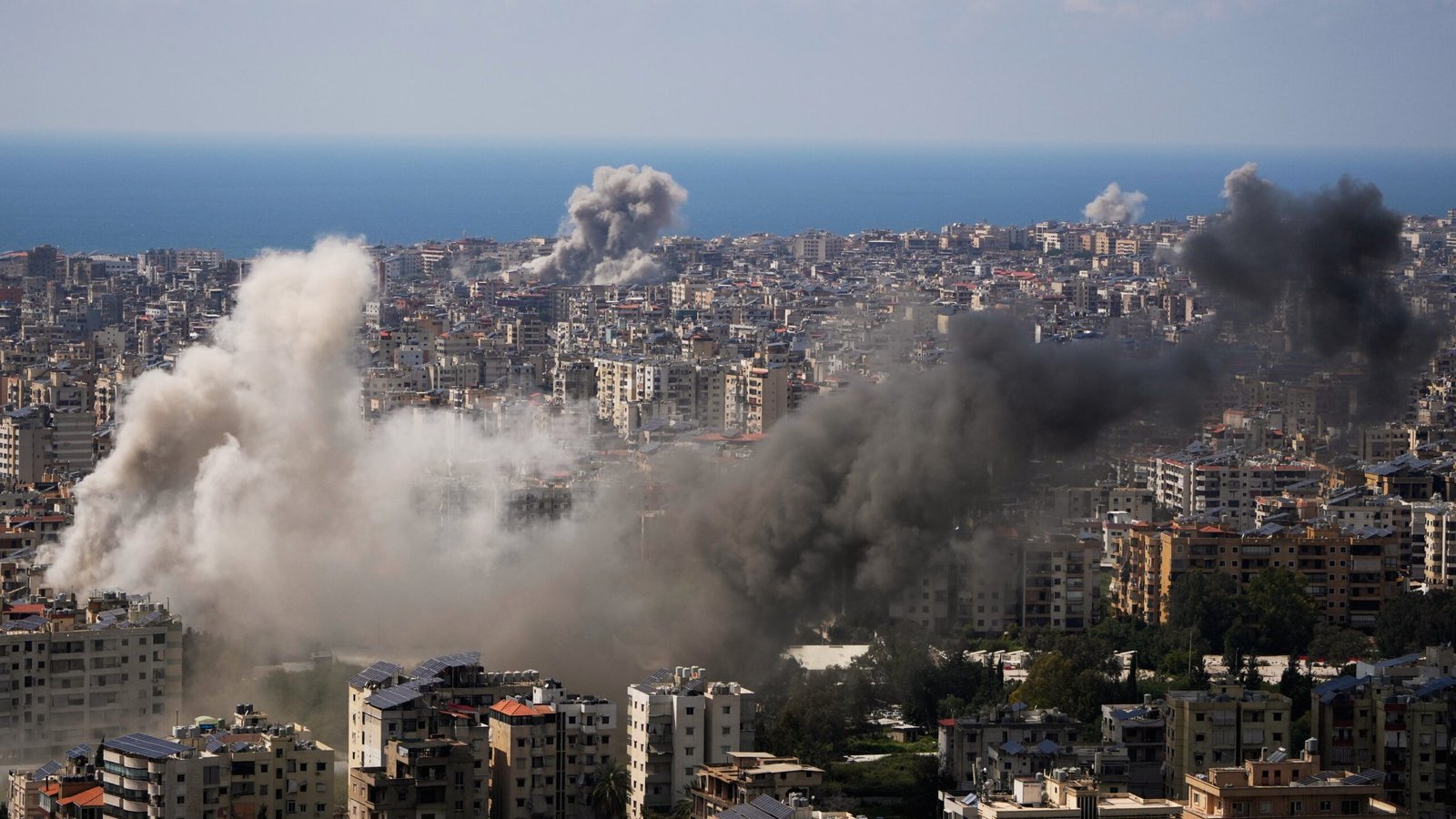
Lebanon: Israel’s continued military operations in Lebanon remain the most combustible variable in the entire agreement. Iran has repeatedly stated it will not accept a ceasefire that does not include Lebanon. Hezbollah has already rejected the U.S.-brokered Israel-Lebanon framework agreement signed Friday, calling it a “disgrace.” If Israel launches a major operation in Lebanon, Iran’s stated position is that the ceasefire dies with it.
The phone call: Vance said pick up the phone. Whether an Iranian official does — and whether whatever is said on that call can lower the temperature — may be the single most consequential act of the next 24 hours.
Key Numbers: The Ceasefire at a Glance
| Event | Date |
|---|---|
| MOU signed by Trump and Pezeshkian | June 17, 2026 |
| 60-day ceasefire window expires | August 17, 2026 |
| Iran strikes M/V Ever Lovely | June 25, 2026 |
| U.S. strikes Iranian military sites | June 26, 2026 |
| Iran drones hit Bahrain / second ship struck | June 27, 2026 |
| Vance posts ceasefire warning | June 26, 2026 |
| Days remaining in 60-day window | 51 |
Breaking News Today is providing live, verified coverage of the Iran-U.S. conflict and the ceasefire crisis. Refresh for the latest updates.
Sources: Fox News, NPR, CBS News, PBS NewsHour, CNBC, The Hill, ZeroHedge, GlobalSecurity.org, Wikipedia (2026 Iran war ceasefire).


More