Taiwan’s 210,000-Drone Shield: Making Invasion Unthinkable

Jubayer Alam
June 27, 2026
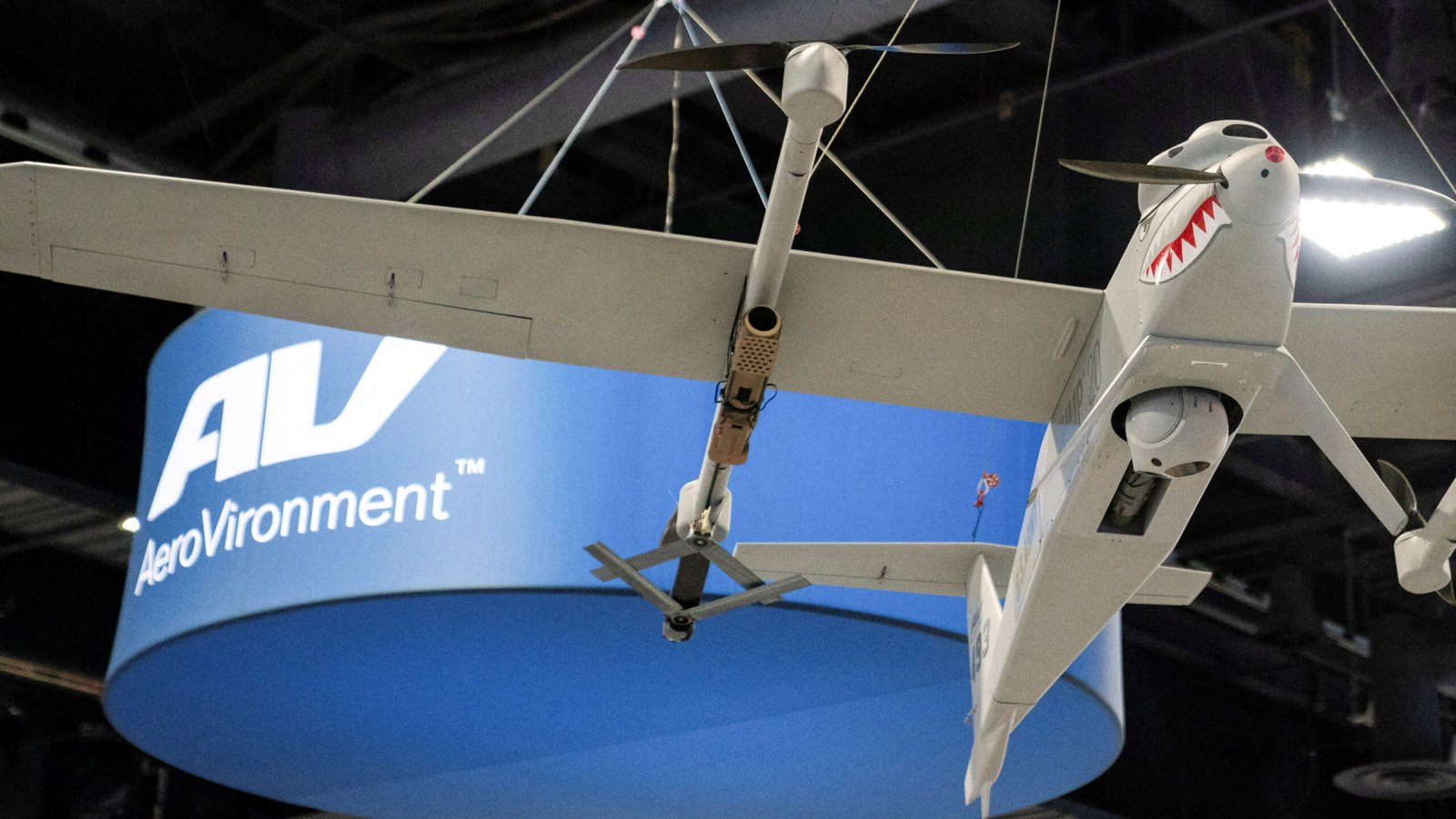
Taiwan is betting its survival on swarms. In one of the most consequential defense announcements of 2026, Taipei’s Executive Yuan has formally introduced a dedicated legislative act to procure over 210,000 unmanned systems — an autonomous force designed not merely to deter a Chinese invasion, but to make it militarily catastrophic for anyone who attempts it.
The Draft Special Act on the Procurement of National Defense Self-Reliance Uncrewed Systems, introduced on June 18, allocates NT$210 billion — approximately $6.65 billion USD — to be disbursed between August 2026 and December 2031. Every platform must be domestically manufactured, with Chinese-made components strictly banned, embedding the program as a cornerstone of Taiwan’s wider industrial sovereignty push.
The Arsenal
The numbers are staggering. Taiwan’s Ministry of National Defense confirmed the budget covers up to 208,200 one-way attack drones, 1,446 reconnaissance drones, and 1,320 unmanned surface vessels. The loitering munitions are designed to dive into their targets and detonate on impact. The recon UAVs provide persistent surveillance across the strait. The unmanned surface vessels are required to autonomously identify and navigate around other ships, possess swarm warfare capabilities, and transmit intelligence and imagery up to 44 kilometers offshore. USNI NewsThe Jerusalem Post
Joseph Wu, the Secretary-General of Taiwan’s National Security Council, described the budget as creating an “unmanned shield.” The goal is to transform Taiwan’s surrounding waters and airspace into a contested killing ground that an invading fleet simply cannot survive crossing. USNI News
“An amphibious assault against a wall of 210,000 autonomous systems is not a military operation — it is a catastrophe waiting to be executed.”
Lessons Written in Ukraine
Taiwan’s strategic pivot did not happen in a vacuum. Defense planners across the island have spent three years studying the war in Ukraine with forensic intensity, watching as cheap commercial-grade drones and one-way attack platforms reshaped the logic of industrial warfare. The lessons are unmistakable: numbers matter, autonomy multiplies lethality, and a nation willing to saturate a battlefield with expendable systems can neutralize forces that are theoretically far superior on paper.
Taiwan’s drone sector has already begun that transformation. Domestic drone production surged from roughly 10,000 units in 2024 to more than 120,000 in 2025, while export volumes reached approximately 85,500 units in just the first two months of 2026, suggesting another strong year ahead. The sector’s output value climbed from NT$5 billion in 2024 to NT$12.9 billion in 2025, and is projected to reach NT$20 billion in 2026. Taiwan Business TOPICS
American Firepower Behind the Shield
Taiwan is not building its autonomous arsenal alone. U.S. defense firms Anduril, Kratos, and General Atomics have all sold drones to Taipei and are actively exploring co-production agreements on the island. Anduril’s Altius attack drones were fielded against maritime targets for the first time this month, and the first MQ-9 SeaGuardian drone arrived in Taiwan for flight trials this week. USNI News
Shield AI’s Hivemind software — which enables drones to perceive their surroundings and execute missions autonomously without GPS or external communications — is being integrated into Taiwanese platforms. The explicit goal is to indigenize the AI so Taiwan never needs to call Washington for a software update during a crisis. Taiwan Business TOPICS
Auterion has also signed a strategic partnership with Taiwan’s National Chung-Shan Institute of Science and Technology, integrating its AI-powered drone swarming platform, Nemesis, into the next generation of Taiwanese unmanned vehicles. Taiwan Business TOPICS
China’s Growing Shadow
The urgency is not theoretical. China’s military conducted exercises firing dozens of rockets toward Taiwan and deploying large numbers of warships and aircraft near the island in a show of force that drew concern from regional allies and the West. Beijing has never renounced the use of force to bring Taiwan under its control. The Jerusalem Post
China is developing a wide variety of unmanned systems and continues to focus on collaborative unmanned operations — swarm warfare — which defense analysts describe as deeply concerning. China’s state-owned defense conglomerate NORINCO unveiled a military vehicle capable of autonomously carrying out combat support missions at speeds of up to 50 kilometers per hour in February 2025. Vision Times
⚠️ Context Box: Ukraine targets production of over 7 million drones in 2026. China’s estimated annual production capacity runs into the millions. The United States is moving to procure 300,000 systems. Taiwan’s current inventory stands at fewer than 10,000 combat-relevant drones — making the $6.6 billion act a critical inflection point, not a finish line. The Diplomat
A Race Against Legislative Politics
The program’s greatest threat may not come from across the strait — but from within Taiwan’s own legislature. All domestic procurement components were cut by opposition parties in May 2026, leaving only Foreign Military Sales channels intact, and new domestic defense drone procurement dropped to zero. The Diplomat
Even if funds are eventually restored, Taiwan’s unmanned industry could face a near two-year standstill. A September 2026 budget submission and legislative passage no earlier than February 2027 would push contract awards to mid-2027 at the earliest. Manufacturers lose the anchor orders that allow them to scale production lines, the supply chain cannot cut its dependency on Chinese components by the 2027 target, and the gap between Taiwan’s current inventory and its targets widens further with every month of delay. The Diplomat
What Comes Next
The Draft Special Act is scheduled to run from August 1, 2026 through December 31, 2031, with funding allocated annually to procure domestically developed uncrewed defense systems. Its passage in the Legislative Yuan would unlock the $6.65 billion and allow procurement contracts to flow to domestic manufacturers under strict indigenization requirements. Failure would leave Taiwan’s drone shield on paper — an aspiration, not an arsenal. Vision Times
What is not in question is the strategic logic driving it. Taiwan has watched Ukraine demonstrate, at enormous cost, that autonomous systems change the calculus of modern warfare in ways that conventional deterrence cannot replicate. The island of 23 million people, separated from mainland China by 180 kilometers of open water, has drawn its conclusion: the most credible deterrent against invasion is the certainty of catastrophic loss for anyone who attempts the crossing.
Two hundred and ten thousand drones are Taiwan’s answer. Whether the legislature agrees in time may determine whether that answer ever becomes real.
Sources: Taiwan Ministry of National Defense · USNI News (June 24, 2026) · The Diplomat (May 19, 2026) · Vision Times (June 22, 2026) · Taiwan Business TOPICS (April 2026) · U.S. International Trade Administration
© 2026 Breaking News Today. All rights reserved.



More