Justice Barrett Faces Conservative Backlash Following Supreme Court Mail-In Ballot Ruling

Aderson Aiden
June 30, 2026
A fierce political firestorm engulfed the Supreme Court this week after a pivotal 5-4 decision upheld state laws regarding late-arriving ballots. Specifically, election officials can now legally count mail-in ballots received days after Election Day. Justice Amy Coney Barrett authored the majority opinion, which surprised many because she is a prominent appointee of President Donald Trump.
By joining Chief Justice John Roberts and the court’s three liberal justices, Barrett dealt a massive blow to Republican legal efforts. Consequently, the GOP failed to secure strict nationwide Election Day receipt deadlines ahead of the 2026 midterms. This controversial Supreme Court mail-in ballot ruling immediately sparked mass outrage across conservative circles.
While critics quickly framed the decision as a dangerous endorsement of “election month” policies, a closer examination reveals a strict legal distinction. In fact, the court ruled that while the physical receipt of a ballot may happen later, the actual act of voting must absolutely conclude by Election Day.
The Anatomy of the Ruling: Fact vs. Fiction
At its core, the controversy centers heavily on a specific Mississippi state law. This statute allows absentee ballots to be counted up to five business days after an election, provided they carry a valid postmark on or before Election Day.
In 2024, the Republican National Committee (RNC) challenged this state law by arguing that federal statutes establish a single, uniform Election Day. Therefore, they asserted that local officials must receive all ballots by the time polls close. Extending the count, in the RNC’s view, effectively extends the actual election, creates massive vulnerabilities, and sows severe public doubt.
However, Justice Barrett firmly rejected the RNC’s legal interpretation. Instead of conflating the two processes, she drew a sharp line in her majority opinion between the act of casting a vote and the logistical receipt process.
Key Takeaways from Barrett’s Majority Opinion
- The Choice is Final: Barrett wrote a clear defense of the voter, stating, “The electorate’s choice is made when voting is complete, not when ballots are received.”
- Statutory Limits: Furthermore, she noted that federal statutes establish precise voting times but completely ignore ballot receipt deadlines.
- Congressional Authority: In addition, the Constitution empowers Congress to set a uniform day for voting, yet leaves ballot receipt mechanics to the states entirely unless Congress explicitly intervenes.
- No Judicial Overreach: Ultimately, Barrett emphasized the court’s strict limits, noting that the judiciary cannot add to the words Congress chose. Consequently, lawmakers must change the rules themselves if they desire a hard deadline.
Addressing “Election Month” Claims
Although political rhetoric often labels these grace periods as “election month,” Barrett’s ruling grounds itself firmly in legal reality. Because voters cannot legally cast a ballot after Election Day, a postal delay sits completely outside of a voter’s control.
As a result, these delays do not invalidate a lawfully cast ballot under current law, meaning the physical transit of the mail does not extend the voting period.
The Supreme Court Divide
This decision exposed a deep fracture within the court as the conservative supermajority split significantly. By voting 5-4, the justices demonstrated a very clear ideological crossover.
| Voting Bloc | Justices | Stance on Late-Arriving Ballots |
| The Majority | Barrett, Roberts, Kagan, Sotomayor, Jackson | Upheld state laws. Federal law does not dictate a receipt deadline. |
| The Dissent | Alito, Thomas, Gorsuch, Kavanaugh | Struck down state laws. Late receipts illegally postpone the election outcome. |
The Dissenting Viewpoint
Meanwhile, Justice Samuel Alito authored a blistering dissent, arguing that the majority completely misread federal law. In his view, they severely weakened basic election safeguards. Specifically, Alito warned that keeping the window open for late-arriving ballots provides bad actors an extended opportunity to “stuff ballot boxes” during tight, highly contested races.
“Today’s decision leaves open opportunities for voter fraud,” Alito wrote, warning that it greatly undermines faith in election integrity. Additionally, he added a stark warning that the majority’s decision essentially “opens Pandora’s box.”
Mass Outrage and the Trumpworld Backlash
Following the announcement, a fierce and vocal backlash erupted as conservative commentators and voters directed their anger at Justice Barrett. Even though she played a central role in overturning Roe v. Wade, Barrett increasingly faces intense right-wing ire in high-profile election cases. For instance, earlier this year, she joined a coalition to strike down Trump’s signature “Liberation Day” tariff slate.
Unsurprisingly, President Donald Trump wasted no time weaponizing the new ruling to rally his political base. Although he did not mention Barrett by name initially, his frustration with his former appointee remains well-documented.
Trump’s Immediate Response
Taking to his Truth Social platform quickly, Trump labeled the ruling a “tremendous loss” for the country. Furthermore, he declared that counting votes late signals a dangerous shift in American politics. Because he despises the idea of counting ballots long after an election ends, Trump used the moment to intensify pressure on Senate Republicans. Specifically, he urged them to pass the SAVE America Act immediately.
The SAVE America Act Proposals
To address these concerns, the SAVE America Act proposes several sweeping, nationwide changes:
- Proof of Citizenship: First, it requires strict documentary proof of citizenship for federal voting.
- Mail-In Limits: Second, it sharply limits or completely bans widespread mail-in voting.
- Voter ID: Third, it mandates strict voter identification across all 50 states.
In his online posts, Trump argued that politicians have absolutely no excuse to oppose these measures. Instead, he claimed opposition only means one specific thing: cheating. Meanwhile, prominent conservatives quickly echoed this exact sentiment. Senator Eric Schmitt called it a shockingly wrong opinion, while Abe Hamadeh warned that endless mail-in ballots will bog down future elections.
State-by-State Impact Ahead of the 2026 Midterms
Because the November 2026 midterm elections approach rapidly, this ruling carries profound logistical implications. By upholding the Mississippi law, the Supreme Court effectively preserved the status quo in 14 different states and the District of Columbia. Currently, these areas utilize similar grace periods for late ballots.
Furthermore, half of all U.S. states have forgiving deadlines that apply specifically to military and overseas voters under the Uniformed and Overseas Citizens Absentee Voting Act.
Relief for Election Administrators
As a result of this decision, election administrators largely breathed a huge sigh of relief. A ruling for the RNC would have caused massive administrative chaos. For example, states like Illinois and California faced a potential nightmare where they would have needed to rewrite election laws and retrain staff quickly.
Because doing this just months before the polls open is incredibly difficult, administrators had warned the Supreme Court about this exact danger. Ultimately, the majority clearly listened to their practical logistical concerns.
Analyzing the Historical Vote Data
To understand the scale of this issue, we can look at historical data. A recent analysis reviewed jurisdictions with existing grace periods and found that hundreds of thousands of absentee ballots routinely arrive late. Although these ballots rarely exceed 3% of the total state vote, swing districts present an entirely different story.
In highly contested areas, these late ballots matter immensely because they can absolutely determine the final political outcome. Since local races often come down to just a few hundred votes, every single valid mail-in ballot carries significant weight.
The Argument for Voter Access
On the other hand, advocates for voter access openly celebrate the ruling, arguing that it protects the most vulnerable voters in society. For instance, rural citizens often deal with incredibly slow postal routes, while deployed military personnel rely entirely on mail-in voting systems. In addition, voters with disabilities use these remote systems heavily.
Because postal delays frequently happen through no fault of the voter, invalidating their votes over these delays constitutes blatant disenfranchisement. Therefore, voting rights groups argue the court made the only logical choice.
Navigating the Future of Election Integrity
Ultimately, the Watson v. RNC decision highlights a fundamental, ongoing tension within modern American democracy. While citizens constantly demand immediate, election-night finality, the legal system remains committed to counting every legally cast vote. For decades, Americans learned the winner on Tuesday night, but the surge in mail-in voting permanently altered this familiar timeline.
This changing trend was massively accelerated by the 2020 pandemic and later cemented into permanent law by state legislatures.
The Complexities of Modern Ballot Processing
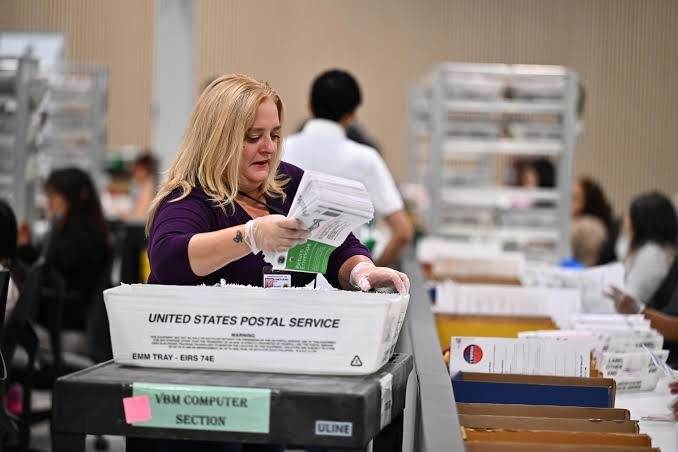
Mechanically, ballot processing takes a significant amount of time. Signature verification requires careful, meticulous human attention, while opening envelopes physically slows the tabulation process down tremendously. Therefore, election workers cannot simply scan a barcode and walk away.
Because security protocols demand multi-step verification for every single mail-in ballot, the integrity of the overall election system is preserved. Consequently, this prevents duplicate voting and blocks unauthorized ballots, even though this rigorous security comes at the heavy cost of speed.
The Shift in Voter Expectations
Despite these explanations, conservatives validly express deep frustration over the shifting timeline. When a candidate leads comfortably on election night only to lose days later, it naturally breeds heavy suspicion among deeply invested voters. They struggle to trust outcomes that change behind closed doors. However, election officials push back strongly against these common fears.
Justice Barrett emphasizes a crucial point regarding the timeline: delayed gratification does not equate to voter fraud. Instead, it simply reflects the complex legal mechanics of modern ballot counting. Furthermore, study after study demonstrates that verifiable mail voting fraud remains an exceedingly rare occurrence.
The Role of Congress Moving Forward
In conclusion, the Supreme Court’s ruling sends the debate back to lawmakers. As Justice Barrett noted, Congress holds the ultimate power here. If Americans truly want a strict stop on ballot receipt, Congress must pass a brand new federal law to state this requirement explicitly. They cannot rely on the courts to invent new rules.
Until Congress acts, state-level grace periods will firmly stand, and the counting will continue in the days following November’s midterms. Therefore, voters must prepare for extended wait times this upcoming election cycle, meaning patience will remain a vital virtue for American democracy.