Iran and U.S. Trade Strikes in Worst Escalation Since Peace Deal — Bahrain Hit, Ceasefire in Jeopardy

Jubayer Alam
June 27, 2026
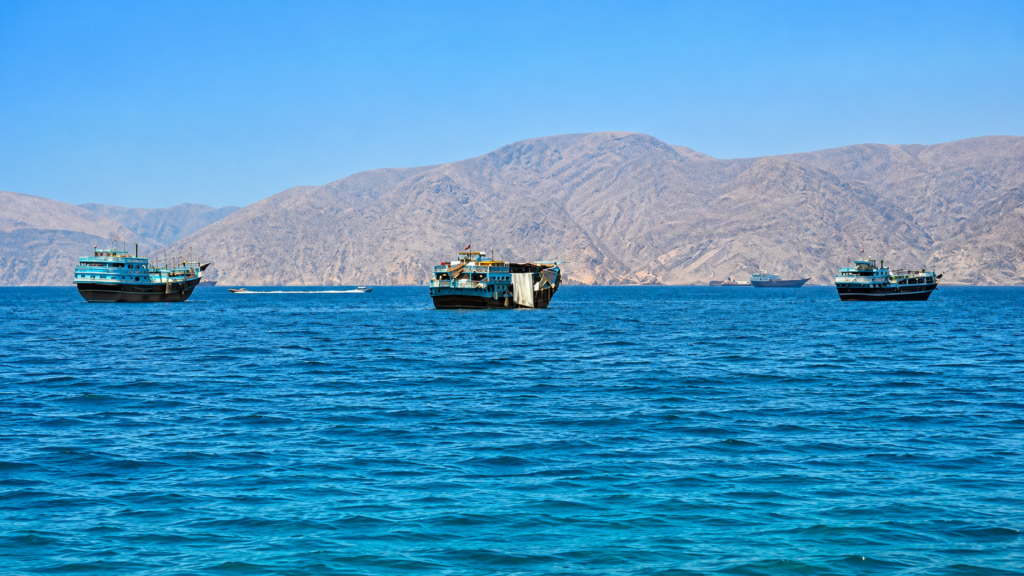
Iran launched a wave of drone strikes against U.S.-linked targets in Bahrain in the early hours of Saturday, June 27, completing a dangerous 72-hour cycle of tit-for-tat military strikes that has placed the fragile ceasefire between Washington and Tehran — signed just one week ago — under the most serious strain since it was agreed.
The Islamic Revolutionary Guard Corps confirmed in a statement carried by Iran’s state-run IRNA news agency that it had targeted “several locations of the U.S. terrorist army in the region.” Bahrain, which hosts the United States Navy’s powerful Fifth Fleet, reported that the drone strikes caused minor structural damage to several buildings and infrastructure. No casualties were reported. Egypt and Kuwait swiftly condemned the attacks, and Bahrain’s Foreign Ministry called the strikes “a flagrant violation of its sovereignty” and “a flagrant breach of international norms.”
The latest outbreak of hostilities is the most serious test yet of the memorandum of understanding (MOU) signed on June 17 by U.S. President Donald Trump and Iranian President Masoud Pezeshkian — a deal that was hailed as the first formal step toward ending a four-month war that has shaken the global economy and repeatedly brought the world to the edge of a wider regional catastrophe.
How the Escalation Unfolded: A 72-Hour Timeline
To understand what happened on June 27, it is essential to trace the chain of events that preceded it — a rapid-fire sequence of provocations and retaliations that left both governments publicly blaming each other for triggering the worst military exchange since the ceasefire was signed.
June 25 — Iran Strikes the M/V Ever Lovely
The trigger came on June 25, when Iran’s Revolutionary Guard launched what President Trump later described as “at least four” one-way attack drones at ships navigating the Strait of Hormuz. One of those drones struck the M/V Ever Lovely, a Singapore-flagged cargo ship that was exiting the Strait along the Omani coast. The ship’s upper deck sustained damage, but its main engine and navigation equipment remained operational and no injuries were reported among the crew, according to the shipping company and Singaporean port officials.
The route the Ever Lovely was using is significant. U.S. forces had invested significant effort in establishing and clearing that particular Omani coastal corridor of Iranian sea mines, creating an internationally supported shipping lane to allow commercial vessels to transit safely. Iran had consistently refused to recognise that route, insisting that all vessels use shipping lanes it had designated closer to its own coastline. In striking the Ever Lovely on the U.S.-approved route, Iran was making an unmistakable political statement about who governs the Strait of Hormuz.
“Obviously, this is a foolish violation of our Ceasefire Agreement,” President Trump wrote on Truth Social shortly after the attack, adding that Iran had fired “at least four” drones, three of which U.S. forces shot down. “One of the Drones solidly hit the upper deck of a large and very expensive Cargo Carrying Ship. Damage was done, but the Ship was able to proceed on its way.”
June 26 — U.S. Warplanes Strike Iranian Military Sites
The United States responded with force the following day. U.S. Central Command announced that six American aircraft struck four targets along the Iranian coastline — specifically, Iranian missile and drone storage locations and coastal radar installations. CENTCOM called Iran’s drone attack on the Ever Lovely “unwarranted aggression” that “clearly violated the ceasefire” and “undermined freedom of navigation as commerce increasingly flows through the vital international trade corridor.”
It was the second time in three weeks that American warplanes had struck similar Iranian targets in response to attacks on commercial shipping in the Strait. The strikes ended a roughly two-week pause in U.S. offensive operations that had held since President Trump called off a threatened third strike round on June 11. U.S. officials framed the June 26 action as deliberately calibrated — large enough to send a strong message on freedom of navigation, but limited enough to avoid derailing the peace negotiations entirely.
Vice President JD Vance made the administration’s position clear in a post on social media Friday evening: “Iran signed a ceasefire agreement. We have honored it. If they have disagreements about how the MOU is being applied, they can pick up the phone. But violence will be met with violence.”
June 27 — Iran Strikes Bahrain
Within hours of the U.S. strikes on Iranian territory, Iran responded by targeting Bahrain. The IRGC confirmed it had struck U.S.-linked targets in the Gulf state. Bahrain’s state media confirmed drone strikes caused minor structural damage across several buildings, and the country’s Foreign Ministry issued its strongest possible denunciation — calling the attack a “blatant violation” of its sovereignty and “a serious threat” to the security of its citizens and residents.
The United Kingdom Maritime Trade Operations Centre, a British maritime security agency, also reported an attack on a commercial vessel near the coast of Oman on Saturday, adding another layer of alarm to an already volatile situation.
What the Ceasefire Actually Says — and Why Both Sides Think They’re Right
At the heart of this crisis is a dispute over the interpretation of the memorandum of understanding signed on June 17. The document includes provisions that the Strait of Hormuz will reopen for international commercial shipping, that Iran agrees to cease attacks on commercial vessels, and that both sides will refrain from further offensive military action. Critically, Article 5 of the MOU stipulates that Iran and Oman — the two nations with coastlines on the Strait — will discuss the navigation framework going forward.
Iran’s position is that the U.S. is violating the agreement in two distinct ways. First, by allowing commercial vessels to transit the Omani corridor rather than Iranian-designated lanes, Washington is — in Tehran’s view — encroaching on Iranian sovereignty over what Iran’s parliament has repeatedly insisted is its own maritime domain. Second, Iranian officials argue that by continuing to support Israel’s military campaign in southern Lebanon, which was a key condition of the broader deal, the U.S. has already broken the agreement.
Mohsen Rezaei, a military adviser to Iran’s supreme leader and former commander of the IRGC, was blunt: “America, by supporting the actions of its proxy forces in the region, has violated the first article of the memorandum of understanding, and by continuing to create tensions in the Strait of Hormuz, has violated the fifth article. The response to the violation of any article of the memorandum of understanding will be swift and decisive.”
Ebrahim Azizi, who chairs Iran’s parliamentary national security commission, went further — describing Thursday’s drone attack on the Ever Lovely not as a ceasefire violation, but as “ceasefire management.” His claim that “the Strait of Hormuz is governed by Iran” encapsulates the core dispute: Tehran refuses to accept that international commercial vessels have the right to transit via any route other than one it controls.
The United States sees it in diametrically opposite terms. Washington views the Strait as international waters governed by international law, and the attack on a civilian cargo ship as an unambiguous breach of the agreement. “The unwarranted aggression against commercial shipping by Iranian forces clearly violated the ceasefire,” CENTCOM said. “Furthermore, Iran’s dangerous behavior undermined freedom of navigation as commerce increasingly flows through the vital international trade corridor.”
The Peace Deal at Risk: What Was at Stake
The June 17 memorandum of understanding was the product of months of painful negotiation, mediated at different stages by Pakistan, Oman, and Switzerland. It represented a breakthrough after a conflict that began on February 28, when the United States and Israel launched a joint military operation striking hundreds of targets in Iran, killing Supreme Leader Ali Khamenei and dozens of top Iranian officials. Iran had retaliated by closing the Strait of Hormuz, launching hundreds of ballistic missiles and thousands of drones at Israel and U.S.-allied countries across the Middle East.
The 60-day MOU was supposed to create breathing room for a more comprehensive peace agreement. It included a commitment to reopen the Strait of Hormuz to international shipping and outlined a framework for $300 billion in reconstruction and development funding for Iran — an extraordinary provision that underscored just how much both sides had to gain from a lasting deal.
But the deal had been under strain almost from the moment it was signed. On June 19, Trump announced a renewed ceasefire between Israel and Hezbollah. Israel continued strikes in southern Lebanon the following day, prompting Iran to temporarily close the strait again, citing the Israeli actions as a ceasefire violation. The June 27 escalation is the most serious episode yet — the first full exchange of strikes between U.S. and Iranian military forces since the MOU was signed.
Peace talks in Switzerland have also been disrupted. Brent crude prices rose after U.S.-Iran negotiations in Geneva were abruptly postponed in the wake of the latest violence. U.S. and Iranian negotiators had reportedly been close to establishing what both sides described as a “deconfliction mechanism” for Lebanon — but the military escalation has thrown the diplomatic calendar into uncertainty.
The Strait of Hormuz: Why the World Is Watching
The Strait of Hormuz — a narrow, 34-kilometre-wide waterway between Iran and Oman — is the single most important chokepoint for global energy supplies. Before the war began, approximately 20% of the world’s seaborne oil trade and 20% of global liquefied natural gas (LNG) passed through the strait daily, primarily from Saudi Arabia, the UAE, Iraq, and Qatar. In 2024, roughly 84% of crude oil transiting the Strait was destined for Asian markets, with China receiving approximately a third of its total oil supply via this route.
Iran’s closure of the Strait at the start of the war — and its subsequent use of mines, drones, and direct attacks on commercial vessels to enforce that closure — has been described by the International Energy Agency as “the largest supply disruption in the history of the global oil market,” and by the IEA’s executive director as “the greatest global energy security challenge in history.”
The economic consequences have been severe and global. The World Bank has cut its 2026 global economic growth forecast to 2.5%, the lowest since the COVID-19 pandemic. Gulf economies are projected to expand just 1.3% this year, down from 4.5% in 2025. Oil prices surged past $120 per barrel at the height of the crisis, before falling back to around $92 per barrel in late May on optimism about a peace deal. At the war’s peak, American motorists were paying over half a billion dollars more per day in higher gasoline costs. The Pentagon’s operational costs for the war had reached $29 billion as of May 2026.
The events of June 25–27 have rattled energy markets again. A U.N. maritime agency had begun carefully moving stranded vessels out of the Strait via the Omani coastal route earlier in the week. After Thursday’s attack on the Ever Lovely, those evacuation operations were halted, with the agency stating it would not resume without guarantees of safe passage. The marine data firm Windward noted that while the Strait remained technically open, with dozens of vessels transiting, “the pace of normalization has slowed.”
Experts warn that even if a durable ceasefire is achieved, energy prices could take months or longer to fully normalise. Refineries that were shut as a precaution could take 40–60 days to reach near-full capacity. Analysts at the International Capital Markets Association have said oil prices will likely remain between $90 and $100 “at least for the next couple of months,” citing significant infrastructure damage across the Gulf, ongoing security risks for tanker traffic, and depleted inventories worldwide.
Regional Fallout: Bahrain, Lebanon, and the Gulf States
The Iran-U.S. conflict has consistently spilled over into the wider Middle East, and the June 27 events are no exception. Bahrain has been a persistent target throughout the war — the country has intercepted hundreds of missiles and drones since February, and several significant facilities have been struck, including the Bahrain International Airport vicinity, a petroleum refinery complex, and infrastructure belonging to its national oil company, BAPCO.
Saturday’s drone strike drew immediate condemnation from Bahrain’s Foreign Ministry, which called the attack “a blatant violation of sovereignty” and described it as “a blatant breach of international norms and conventions.” Egypt and Kuwait — both of which have their own concerns about Iranian drone campaigns in the region — also condemned the attack swiftly.
Meanwhile, the Lebanon angle continues to complicate the broader ceasefire architecture. On June 26, Secretary of State Marco Rubio announced a fresh framework agreement between Israel and Lebanon — but Hezbollah immediately rejected the deal, calling it “a disgrace” and promising to continue fighting Israeli forces. Hezbollah chief Naim Qassem said the Lebanon ceasefire should instead be governed by the Iran-U.S. MOU, not a separate bilateral framework. Israel, for its part, issued its first evacuation orders to Lebanese civilians since the latest ceasefire framework was announced.
For the Gulf states, the situation is increasingly uncomfortable. They find themselves caught between Iran’s campaign of escalating drone and missile attacks and their status as hosts for U.S. military assets — a role that has made them targets. As one regional analyst told Al Jazeera, these countries “see these Iranian attacks as attacks on their territorial integrity, their sovereignty. They see this as a war that they’ve been dragged into against their will.”
What Happens Next: Escalation or Diplomacy?
The fundamental question now is whether the June 25–27 exchange represents a prelude to renewed full-scale conflict, or a final burst of escalation before both sides step back to the negotiating table.
Analysts are divided. Trita Parsi of the Quincy Institute for Responsible Statecraft argues that Iran’s increasingly swift and proportional responses to U.S. military action signal a deliberate doctrine — one designed to demonstrate that Tehran will not absorb American strikes without retaliation, while stopping short of actions that would fully restart the war. “They believe they have to respond proportionately, but very harshly and swiftly, against any American attack,” Parsi said.
Others note that in previous conflicts, one side sometimes escalates aggressively precisely in order to establish leverage before signing a deal — demonstrating strength as a prelude to compromise, rather than as an alternative to it. The pattern of the last 72 hours — Iran attacks shipping, U.S. strikes military sites, Iran hits Bahrain — fits a model of controlled escalation with both sides carefully avoiding the kind of mass-casualty strikes that would make a return to negotiations politically impossible.
President Trump has not publicly reacted to Saturday’s Bahrain strikes as of the time of publication. Neither side appears to have definitively closed the door on diplomacy. Iran and the U.S. have established a direct communications line to prevent further military incidents in the Strait, Iran’s state-backed Press TV reported Friday — a small but meaningful signal that both sides retain some interest in de-escalation.
What is not in doubt is the urgency. The ceasefire memorandum was the product of months of suffering and economic devastation. Millions of people around the world are still feeling the economic effects of the Strait of Hormuz closure, from fuel prices in California to food costs in the Gulf and energy shortages as far away as South and Southeast Asia. The 60-day window for negotiating a final deal is now significantly more fragile — and the world is watching closely to see whether the diplomats or the drones will determine what comes next.
Key Facts at a Glance
- June 25, 2026: Iran hits cargo ship M/V Ever Lovely in Strait of Hormuz with drone. No casualties.
- June 26, 2026: Six U.S. aircraft strike four Iranian military targets — missile storage, drone facilities, coastal radar. First U.S. strikes on Iran since June 11.
- June 27, 2026: Iran’s IRGC launches drones at U.S.-linked targets in Bahrain. Minor structural damage; no casualties reported.
- The ceasefire MOU was signed June 17, 2026, by Trump and Iran’s Pezeshkian — one week before the latest escalation.
- Strait of Hormuz: 20% of global seaborne oil passes through the waterway; normalization operations have stalled.
- Geneva talks between U.S. and Iranian negotiators were abruptly postponed following the escalation.
- World Bank has cut 2026 global growth forecast to 2.5% — lowest since COVID-19.
Breaking News Today provides live, verified coverage of the Iran-U.S. conflict and the Strait of Hormuz crisis. Follow us for updates as this story develops.
Sources: NPR, CBS News, NBC News, Al Jazeera, Fox News, Bloomberg, CNBC, Wikipedia (2026 Iran war ceasefire), U.S. Central Command.