JD Vance VP Swap Joke Brings Laughter to the White House Press Room

Jubayer Alam
June 28, 2026
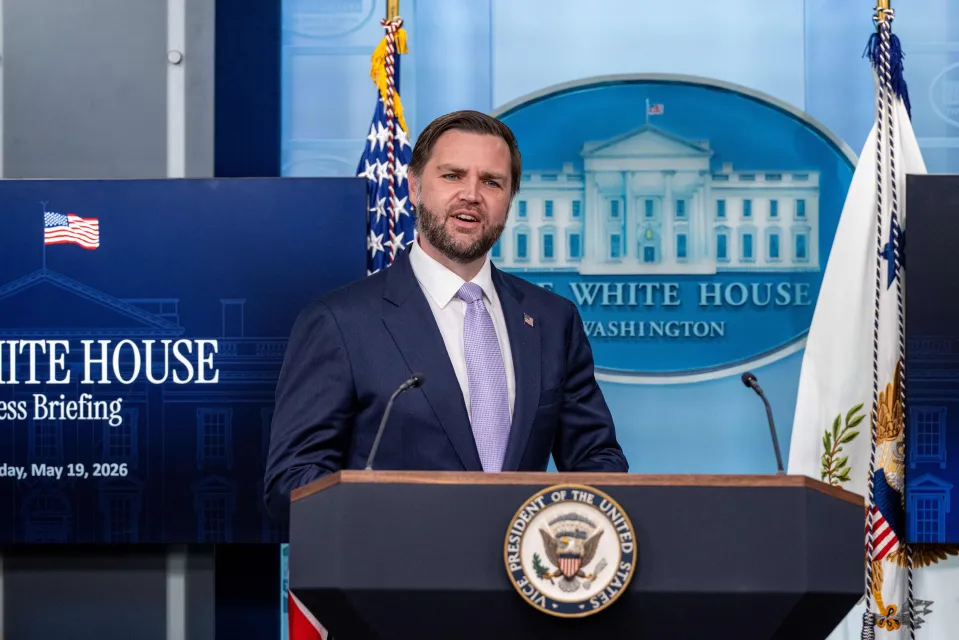
The White House James S. Brady Press Briefing Room is typically a theater for intense political sparring, hard-hitting questions, and high-stakes policy announcements. However, a recent briefing took an unexpectedly lighthearted turn when Vice President JD Vance stepped up to the podium. Stepping in to cover for White House Press Secretary Karoline Leavitt—who is currently away on maternity leave—Vance quickly disarmed the press corps with a viral quip about parental leave, workplace coverage, and a theoretical job trade.
The proposition, which quickly became known online as the JD Vance VP swap, provided a rare, humanizing glimpse into the daily lives of the administration’s top officials as they balance their monumental public duties with expanding their families. In an administration that has heavily leaned into pro-family political messaging, the Vice President’s joke perfectly encapsulated the often-comedic realities of working parents coordinating their schedules. Here is the full breakdown of the viral moment, the growing families behind the scenes at the White House, and the historical context of expecting parents in the executive branch.
The Setup: Why the Vice President Took the Podium
To fully understand the context of the JD Vance VP swap joke, one must look at the current staffing dynamics within the West Wing. Karoline Leavitt, who made history by becoming the youngest White House Press Secretary at the age of 27, welcomed her second child, a baby girl named Viviana, in May 2026. Since her departure for maternity leave, the White House has utilized a rotating cast of senior administration officials and deputy press staff to field questions from the notoriously demanding Washington press corps.
Having various officials take the podium is not entirely unprecedented during a press secretary’s absence, but having the sitting Vice President of the United States handle the daily briefing is a notable rarity. Vance’s appearance at the podium signaled a show of support for Leavitt while also giving the Vice President a direct line to the media to discuss the administration’s ongoing initiatives.
However, before Vance opened the floor to the standard barrage of questions regarding foreign policy, economic indicators, and legislative battles, he took a moment to address the elephant in the room: why he was standing in the press secretary’s spot, and what it cost Leavitt to get him there.
The “JD Vance VP Swap” Condition Explained
Addressing the room full of reporters, Vance started by sending his best wishes to Leavitt, acknowledging the vital time she was spending at home with her newborn daughter. With his trademark deadpan delivery, he then revealed that his willingness to face the press corps did not come without some serious negotiations behind closed doors.
Vance’s own wife, Second Lady Usha Vance, is currently pregnant with the couple’s fourth child, with the baby’s arrival expected in late July. Using this impending due date as his leverage, Vance delivered the punchline that would dominate the day’s political news cycle.
“I told Karoline I would stand in for her today for the White House press briefing on the condition that when Usha has our baby in July, that she would be vice president for a couple of weeks!” Vance joked.
The press room, often characterized by its adversarial atmosphere, immediately erupted into laughter. The JD Vance VP swap concept—the idea of a 28-year-old press secretary temporarily assuming the second-highest office in the land, casting tie-breaking votes in the Senate, and receiving high-level security briefings just so the Vice President could change diapers—was a brilliant piece of situational humor.
A Viral Moment: How the Internet Reacted
In today’s hyper-connected political landscape, it did not take long for the clip of the JD Vance VP swap to circulate across social media platforms, drawing millions of views, likes, and comments within hours. The bipartisan appeal of the joke largely stemmed from its relatability. Regardless of political affiliation, working parents across the country understood the complex calculus of negotiating shift coverage and parental leave with colleagues.
- The “Press Secretary Vance” Phenomenon: Social media users were quick to meme the situation. Some joked that Vance looked a little too comfortable behind the briefing room podium, playfully dubbing him “Press Secretary Vance” and suggesting he keep the job permanently.
- “Vice President Leavitt”: Conversely, fans of Karoline Leavitt enthusiastically endorsed the temporary promotion. Supporters joked about what her first executive actions would be and how she would handle the notoriously complex dynamics of the United States Senate for two weeks in July.
- Praise for Parental Leave Visibility: Beyond the humor, many commentators and family advocacy groups praised the moment for highlighting the importance of both maternity and paternity leave. By openly discussing his intention to take time off to support his wife and newborn, the Vice President inadvertently sparked a positive national conversation about the need for fathers to be present during the crucial early weeks of a child’s life.
A White House Baby Boom: The Vance and Leavitt Families
The JD Vance VP swap joke is rooted in a very real “baby boom” currently taking place within the upper echelons of the Trump-Vance administration. The overlapping timelines of Leavitt’s and the Vances’ growing families have created a unique atmosphere in the West Wing.
Karoline Leavitt’s Growing Family
Karoline Leavitt’s trajectory has been nothing short of meteoric. Balancing the grueling, 24/7 demands of being the primary spokesperson for the President of the United States with the realities of motherhood is a monumental task. The announcement of her pregnancy late last year, followed by the birth of her daughter in May, has been met with widespread support from her colleagues. Her temporary step back from the podium has allowed her to focus on her family, setting a strong example for working mothers in high-stress political roles.
The Arrival of the Fourth Vance Baby
For JD and Usha Vance, July will mark a major milestone as they welcome their fourth child, officially confirmed to be a baby boy. The couple already shares three children: Ewan, Vivek, and Mirabel.
The Vice President has been remarkably candid about the realities of this pregnancy. In a recent podcast appearance, Vance opened up about the physical toll the pregnancy has taken on his wife, noting that at 40 years old, the experience has been notably harder on Usha than her previous pregnancies. He also shared that Usha was initially hesitant about being pregnant while under the intense, unrelenting spotlight of the national political stage. Despite these challenges, the couple has expressed deep gratitude for the medical care they receive and the support of the White House staff in accommodating their family’s needs.
| Family | Expected/Born | Details |
| Karoline Leavitt | May 2026 | Welcomed her second child, a baby girl named Viviana. Currently on maternity leave. |
| JD & Usha Vance | Late July 2026 | Expecting their fourth child, a baby boy. |
Political Messaging: Pro-Family Priorities in the Administration
While the JD Vance VP swap was delivered as a joke, it subtly reinforced one of the administration’s core political platforms. Since his entry into national politics in 2021, JD Vance has been one of the most vocal advocates for increasing the American birth rate and enacting pro-family policies.
Vance has consistently expressed alarm over declining birth rates in the United States and across the developed world, framing it as both an economic and cultural crisis. His political rhetoric frequently centers on making it easier and more affordable for Americans to have and raise multiple children.
By having high-profile administration figures like the Vice President and the Press Secretary actively growing their families while holding office, the administration is effectively practicing what it preaches. Following the announcement of Usha Vance’s pregnancy earlier this year, the White House released a statement declaring the current government to be “the most pro-family administration in history.” The lighthearted banter in the briefing room serves to humanize this policy stance, presenting the administration’s leaders as relatable parents dealing with the same childcare logistics as everyday citizens.
Historical Context: Babies in the Executive Branch
It is exceptionally rare for the occupants of the highest leadership roles in the United States government to have children while in office. The grueling schedules, constant travel, and sheer weight of the presidency and vice presidency usually dictate that politicians seek these offices later in life, long after their children have grown.
The JD Vance VP swap joke brings this historical rarity into sharp focus. When Usha Vance gives birth in July, she will become the first Second Lady in modern American history to have a baby while her husband is serving as Vice President.
To find a comparable situation at the presidential level, one has to look back to the late 19th century. President Grover Cleveland’s wife, Frances Folsom Cleveland, famously gave birth to their second child, Esther, in 1893 during his second term in office. Esther Cleveland remains the only child of a president to actually be born inside the White House. While the Vance baby will not be born in the White House, the arrival of an infant at the Vice President’s residence at the Naval Observatory will certainly be a historic and heavily documented event.
Looking Ahead to July
As June draws to a close and the hot Washington D.C. summer sets in, the countdown to the Vance family’s new arrival continues. Karoline Leavitt is expected to return to the briefing room in the coming weeks, likely relieving the Vice President and other officials of their temporary press duties.
While the Constitution explicitly outlines the line of succession and the duties of the Vice President—meaning a literal JD Vance VP swap is legally impossible—the joke has left a lasting impression. It provided a moment of levity that bridged the gap between the often-untouchable world of high politics and the everyday realities of family life.
When July finally arrives and the Vice President steps away to take his well-deserved paternity leave, the press corps will undoubtedly be watching to see if Karoline Leavitt jokingly claims any temporary executive powers. Until then, the viral moment remains a highlight of the 2026 political season, proving that even in the highest offices of the land, a good joke about parental leave is universally understood.



More