U.S. Strikes Iran in Response to Attack on Commercial Vessel in Strait of Hormuz

Jubayer Alam
June 27, 2026
TAMPA, FLORIDA / STRAIT OF HORMUZ — The United States military launched a sweeping wave of airstrikes against Iranian military targets on Friday, June 26, in what U.S. Central Command officially called a “powerful response” to Iran’s brazen drone attack the day before on a commercial cargo ship navigating the Strait of Hormuz — the world’s most strategically vital maritime chokepoint.
The strikes mark the first time the United States resumed offensive military operations against Iran since a two-week pause that had held following the signing of a landmark memorandum of understanding on June 17 — a deal that was supposed to end the war between Washington and Tehran and reopen the Strait to international shipping. That pause is now over. The ceasefire is under its most severe test yet.
In a formal statement released Friday evening, U.S. Central Command confirmed the scope and justification of the operation:
“U.S. aircraft struck Iranian missile and drone storage locations and coastal radar sites after Iran hit M/V Ever Lovely on June 25 with a one-way attack drone. The Singapore-flagged cargo ship was exiting the Strait of Hormuz along the Omani coast at the time of Iran’s attack. The unwarranted aggression against commercial shipping by Iranian forces clearly violated the ceasefire. Furthermore, Iran’s dangerous behavior undermined freedom of navigation as commerce increasingly flows through the vital international trade corridor.”
CENTCOM also released video footage of the strikes — showing precision strikes against Iranian infrastructure — and pledged that U.S. forces would “continue to provide safe passage coordination and support to commercial vessels transiting the strait” and that “the U.S. military remains present and vigilant to ensure all aspects of the agreement with Iran are adhered to, obeyed, and in full force and effect.”
What Happened: The Ever Lovely Attack
The chain of events that triggered Friday’s U.S. military action began on Thursday, June 25, when Iran’s Islamic Revolutionary Guard Corps launched at least four one-way attack drones at commercial vessels navigating the Strait of Hormuz. Three of those drones were intercepted and shot down by U.S. forces. The fourth found its target.
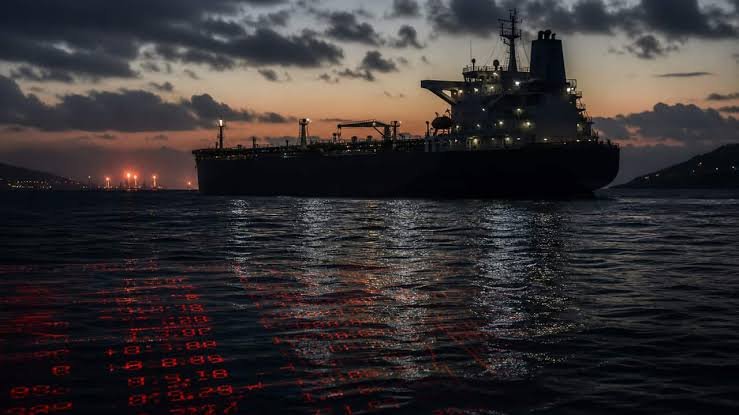
The M/V Ever Lovely — a Singapore-flagged cargo ship exiting the Strait along the Omani coast — was struck on its upper deck by an IRGC drone. The vessel sustained structural damage, but its main engines and navigation systems remained fully operational. No crew members were injured. The ship continued on its course, battered but functional.
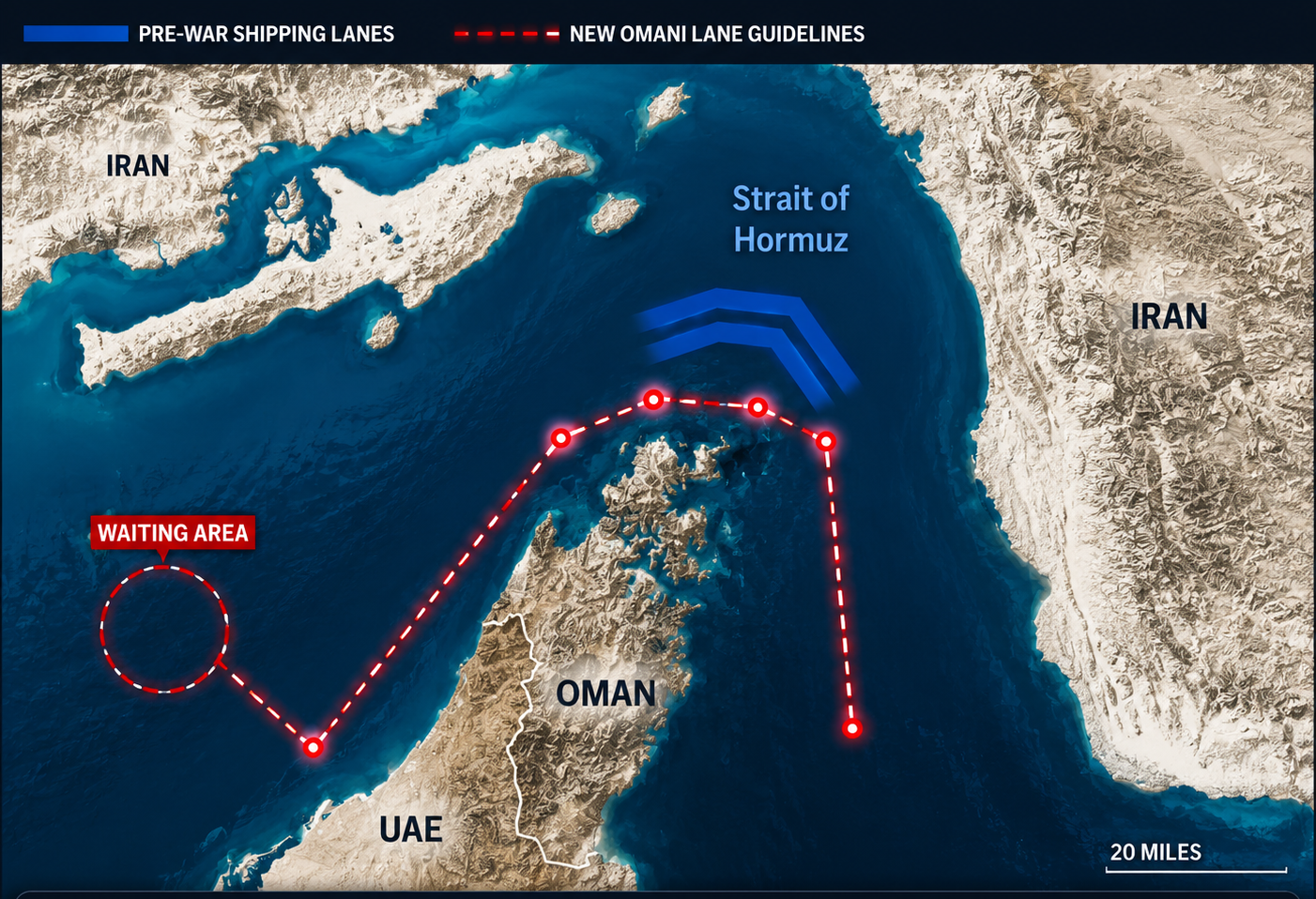
The Omani coastal route the Ever Lovely was navigating is significant. It was established and cleared of Iranian sea mines by U.S. forces as part of the ceasefire arrangement — a dedicated international shipping corridor designed to allow commercial vessels to transit the Strait safely without entering disputed waters closer to the Iranian coastline. Iran has consistently refused to recognise that corridor, insisting that all vessels must seek IRGC permission to transit via routes it controls.
The attack on the Ever Lovely was, in Tehran’s framing, a warning shot against ships using a route it considers illegal. In Washington’s framing, it was a direct, unprovoked assault on a civilian vessel in international waters — and a clear violation of the ceasefire memorandum both nations had signed just eight days earlier.
The UK Maritime Trade Operations Centre, which monitors commercial shipping security across the region, reported the incident and advised all vessels in the area to exercise extreme caution.
Trump: “A Foolish Violation of Our Ceasefire Agreement”
President Donald Trump did not hold back in his initial response to the Ever Lovely attack, taking to Truth Social within hours to describe what had happened and make clear that consequences were coming.
“The Islamic Republic of Iran shot at least four One Way Attack Drones at Ships transversing the Strait of Hormuz,” he wrote. “One of the Drones solidly hit the upper deck of a large and very expensive Cargo Carrying Ship. Damage was done, but the Ship was able to proceed on its way. We knocked down three other Drones. Obviously, this is a foolish violation of our Ceasefire Agreement.”
Speaking at the White House shortly before CENTCOM confirmed the retaliatory strikes, Trump offered a deliberately opaque warning about Iran’s fate. Asked by reporters whether Iran would face consequences, the president replied: “You’ll find out.”
“I don’t like the fact that they took a shot yesterday, actually four of them,” he added. “They shouldn’t be doing that. So you’ll find out.”
Later, addressing a gathering of conservative Christians in Washington D.C., Trump acknowledged the attack had surprised him: “We still have a fight. They have some capability, not much. They’re not winning or anything, but they have some capability; they can still shoot. Nobody saw it coming, and it hit a ship and did some damage.”
The Strikes: Six Aircraft, Four Targets, One Clear Message
When the U.S. military response came on Friday evening, it was precise, deliberate, and — by design — calibrated to send a message without igniting a wider conflagration.
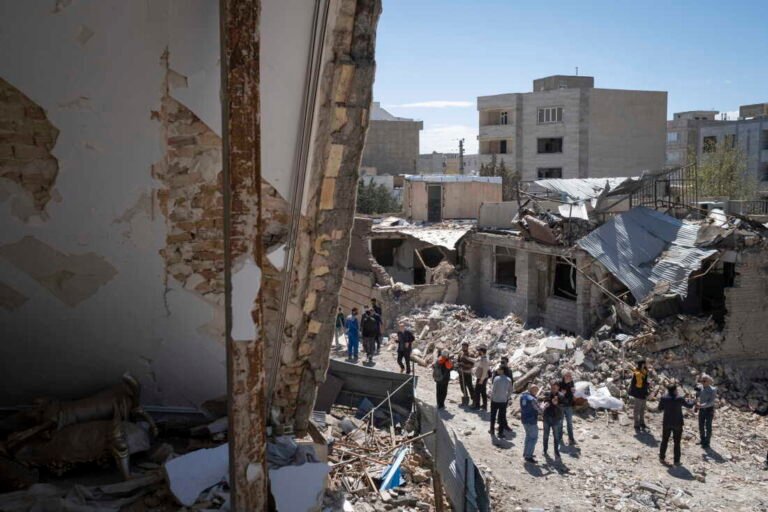
Six U.S. aircraft struck four targets along the Iranian coastline — specifically, missile and drone storage locations and coastal radar installations. Strikes were reported near the southern Iranian port of Sirik, located close to the Strait of Hormuz itself. CENTCOM released video of the strikes, providing visual confirmation of what had been hit.
U.S. officials described the operation as deliberately proportionate. The scope was large enough to constitute a credible military response and to send an unambiguous signal about American resolve to defend freedom of navigation. But it was limited enough to avoid the kind of mass-scale assault that would make any return to diplomatic negotiations politically impossible for either side.
The word used internally in one briefing, according to multiple reports, was “course correction” — a phrase that captures the paradox at the heart of Friday’s strikes: the United States was simultaneously retaliating with force and trying not to blow up the peace process it had spent months constructing.
The operation ended a roughly two-week pause in U.S. offensive strikes that had held since President Trump cancelled a threatened third round of attacks on June 11. It was the second time in three weeks that American warplanes had struck similar Iranian targets following IRGC attacks on commercial shipping in the Strait.
Vice President JD Vance reinforced the message publicly and sharply, posting on social media that evening: “Iran signed a ceasefire agreement. We have honored it. If they have disagreements about how the MOU is being applied, they can pick up the phone. But violence will be met with violence.”
Iran Responds: “The Treaty-Breaking U.S. Regime Has Violated Its Commitments”
Iran wasted no time in hitting back — both rhetorically and militarily.
The Islamic Revolutionary Guard Corps Navy issued a statement claiming it had struck American military positions across the region in retaliation for the U.S. airstrikes: “Following the violation of the ceasefire by the Zionist regime in southern Lebanon, a few hours ago, the treaty-breaking US regime, as always, violated its commitments and, under various pretexts, attacked the coasts of the Islamic Republic of Iran with an airstrike due to the passage of a violating ship through an unauthorized route in the Strait of Hormuz.”
The IRGC’s statement then invoked the MOU itself as legal justification for its actions: “According to clause 5 of the Islamabad Memorandum of Understanding, arrangements for controlling passage in the Strait of Hormuz are with the Islamic Republic of Iran; however, the US, by provoking various parties, sought to violate this commitment, to which a necessary response was given, and this will be the case from now on.”
Most strikingly, the IRGC issued a direct warning about future escalation: “If the violation is repeated, our response will be more extensive than this.”
Iran’s state broadcaster IRIB reinforced the government’s position, declaring that any ship transiting the Strait via routes not approved by Iran cannot be guaranteed safe passage: “Iran has repeatedly stated that the situation in the Strait of Hormuz will not return to what it was before the U.S. attack on Iran. Any transit through the Strait must follow the routes announced by Iran; otherwise, the security of vessels cannot be guaranteed.”
What the MOU Actually Says — and Why It Matters
At the heart of the dispute between Washington and Tehran is a fundamental disagreement over the interpretation of Article 5 of the Islamabad Memorandum of Understanding — the ceasefire document signed by President Trump and Iranian President Masoud Pezeshkian on June 17.
Article 5 states that Iran will use its “best efforts” to ensure the safe passage of commercial vessels through the Strait of Hormuz at no charge for 60 days, while arrangements for “controlling passage” in the Strait are to be carried out “in coordination with” Iran. The U.S. interpretation is that this means commercial ships are free to transit the Strait on any internationally recognised route, and Iran must not interfere. The Iranian interpretation is that “controlling passage” gives Tehran direct authority over which routes ships may use — meaning any vessel transiting the U.S.-backed Omani coastal corridor without IRGC authorisation is violating the agreement, not Iran.
The Hill reported Friday that Iran’s Deputy Foreign Minister Kazem Gharibabadi put Tehran’s position bluntly: “Safe passage through the Strait of Hormuz, with ambiguous arrangements, parallel routes, or decision-making outside of Iran’s considerations as the coastal state, cannot be guaranteed. Any credible framework must be based on coordination with Iran and the provisions of paragraph five of the Islamabad Memorandum of Understanding.”
The Trump administration has consistently rejected Iran’s claim. The Strait of Hormuz is an international waterway under the UN Convention on the Law of the Sea, and vessels have the right of transit passage through international straits regardless of the preferences of the coastal state. The U.S. view is that Iran’s insistence on controlling transit routes is not a legitimate exercise of sovereignty — it is a demand for extortion.
The International Maritime Organization announced Friday that it was temporarily pausing its vessel evacuation operation in the region following the Ever Lovely attack, stating it would not resume until guarantees of safe passage were in place.
The Broader Context: Why the Strait of Hormuz Is Worth Fighting For
To understand why both sides are willing to risk the collapse of a hard-won ceasefire over shipping routes, it is essential to understand what the Strait of Hormuz means to the global economy.
The Strait — a 34-kilometre-wide waterway between Iran and Oman — is the single most important maritime chokepoint on the planet. Before the war began on February 28, approximately 20% of the world’s seaborne oil and 20% of global liquefied natural gas passed through it daily. Saudi Arabia, the UAE, Iraq, Qatar, and Kuwait all depend on the Strait for the overwhelming majority of their energy exports.
Iran’s closure of the Strait at the start of the war was described by the International Energy Agency as the “largest supply disruption in the history of the global oil market.” The disruption sent Brent crude prices soaring past $120 per barrel, triggered emergency reserve releases by 32 IEA member states, devastated Gulf aviation and tourism, and pushed the World Bank to cut its 2026 global growth forecast to 2.5% — the lowest since COVID-19.
For the United States, ensuring that commercial vessels can transit the Strait freely, on internationally recognised routes, is not merely a matter of trade policy. It is a fundamental statement about the rules-based international maritime order — and about whether a regional military power can use threats of force to extort fees and dictate routes to global shipping. Allowing Iran to establish that precedent, in Washington’s view, would embolden hostile actors everywhere.
For Iran, control over the Strait is perhaps its single most powerful strategic lever in any negotiation with the United States. Surrendering that control — or allowing the U.S. to establish a de facto alternative corridor that bypasses Iranian authority — would be a devastating blow to Tehran’s negotiating position on every issue from nuclear talks to sanctions relief.
The Diplomatic Fallout: Geneva Talks at Risk
Friday’s U.S. strikes triggered immediate alarm among diplomats who have been working for months to hold the ceasefire architecture together.
Reuters reported that Iran was weighing whether to walk away from ongoing peace talks in Switzerland following the American airstrikes. Sources cited by the wire agency indicated that Tehran was reassessing its continued participation, though no formal withdrawal had been announced.
The Switzerland talks — which were supposed to address the most complex remaining issues, including Iran’s nuclear programme, sanctions relief, the long-term status of the Strait of Hormuz, and the reconstruction of war-damaged Iranian infrastructure — were already delicate. The addition of active military exchanges between the two nations makes the diplomacy vastly harder.
Brent crude prices rose after news broke that the Geneva talks might be postponed. Markets had been cautiously optimistic that the MOU would hold and that the Strait would gradually normalise — assumptions that the events of the past 72 hours have severely tested.
CNN’s Al Jazeera correspondent Kimberly Halkett noted that Friday’s U.S. strikes appeared more restrained than past American operations against Iran. “There’s no question that the fact that the United States has acted in a measured way suggests that the US is making a distinction between an attack by Iran on a commercial ship versus an attack on a US warship,” she observed — a distinction that, for now, appears to be the thin line separating controlled escalation from all-out war.
What Comes Next: The Road Ahead
The immediate hours and days following Friday’s U.S. strikes will be critical in determining whether the ceasefire can be salvaged or whether the cycle of tit-for-tat escalation will ultimately consume the 60-day MOU framework entirely.
Several developments to watch:
Iran’s response at sea: The IRGC has already warned that any repetition of U.S. strikes on Iranian territory will be met with a “more extensive” response. Whether Iranian forces make good on that threat — and whether any further Iranian attacks on commercial shipping trigger another round of U.S. retaliation — will set the tone for the coming days.
Geneva: The fate of the Switzerland talks is the pivotal diplomatic question. If Iran’s negotiators formally walk away, the 60-day window for a permanent deal effectively becomes a countdown to resumed full-scale hostilities. If they stay at the table — even grudgingly — there remains a path forward.
Lebanon: Israel’s continued military operations against Hezbollah in southern Lebanon remain an active source of Iranian frustration. Iran has repeatedly stated that the ceasefire cannot hold if Israel continues to bombard Lebanon. On June 26, Israeli strikes killed at least 27 people in Lebanon despite the ceasefire framework. As long as the Lebanon front remains hot, Iran has a ready-made justification for its own violations of the MOU.
Oil markets: Every escalation in the Strait translates directly into market volatility. The tentative normalisation of shipping that had been underway since mid-June — with 115 vessels having safely evacuated the Persian Gulf in the days before the attack — has been set back. The IMO has paused its operations. The Joint Maritime Information Centre raised the threat level for Strait transit to “substantial.”
What is not in doubt is the stakes. The MOU signed at Versailles eleven days ago represented the product of months of pain, death, economic devastation, and painstaking diplomacy. The agreement was always fragile. Friday’s events have made clear just how fragile.
By the Numbers: The Strikes and Their Context
| Detail | Figure |
|---|---|
| Date of Ever Lovely attack | June 25, 2026 |
| Iranian drones fired at ships | 4 (3 intercepted, 1 hit) |
| Date of U.S. retaliatory strikes | June 26, 2026 |
| U.S. aircraft deployed | 6 |
| Iranian targets struck | 4 (missile/drone storage + coastal radar) |
| Strike location | Near Sirik, Iranian coastline |
| Days since MOU was signed | 9 |
| Days remaining in 60-day window | 51 |
| U.S. servicemembers killed in war to date | 13 |
| Ships evacuated from Strait before attack | 115 |
| IMO evacuation status | Paused |
Official Statements
U.S. Central Command (CENTCOM), June 26, 2026: “U.S. aircraft struck Iranian missile and drone storage locations and coastal radar sites after Iran hit M/V Ever Lovely on June 25 with a one-way attack drone. The Singapore-flagged cargo ship was exiting the Strait of Hormuz along the Omani coast at the time of Iran’s attack. The unwarranted aggression against commercial shipping by Iranian forces clearly violated the ceasefire. Furthermore, Iran’s dangerous behavior undermined freedom of navigation as commerce increasingly flows through the vital international trade corridor. CENTCOM forces continue to provide safe passage coordination and support to commercial vessels transiting the strait. The U.S. military remains present and vigilant to ensure all aspects of the agreement with Iran are adhered to, obeyed, and in full force and effect.” — Read the full CENTCOM statement →
IRGC Navy Statement, June 26–27, 2026: “The IRGC Navy responded to this aggression by striking the positions of the US terrorist army in the region… If the violation is repeated, our response will be more extensive than this.”
President Donald Trump, Truth Social, June 26, 2026: “Obviously, this is a foolish violation of our Ceasefire Agreement.”
Vice President JD Vance, X (formerly Twitter), June 26, 2026: “Iran signed a ceasefire agreement. We have honored it. If they have disagreements about how the MOU is being applied, they can pick up the phone. But violence will be met with violence.”
Further Reading
- CENTCOM Official Statement: U.S. Strikes Iran in Response to Attack on Commercial Vessel
- Al Jazeera: US strikes Iran in response to drone strike on commercial ship
- CNN: US strikes Iranian targets in response to attack on cargo ship
- Fox News: US strikes Iran after Strait of Hormuz cargo ship attack
- The War Zone: U.S. Carries Out First Strike On Iran Since Peace Memorandum Signed
- Stars and Stripes: US forces strike Iranian targets in response to attack on commercial ship
- NPR: The U.S. and Iran agree to a ‘road map’ for a final deal
- International Maritime Organization
- UN Convention on the Law of the Sea
Breaking News Today provides live, verified coverage of the Iran-U.S. conflict, the Strait of Hormuz crisis, and global security developments. Follow us for continuous updates.


More