Judicial Landmark: Supreme Court Strikes Down Executive Order to Uphold Birthright Citizenship

Md.Moshail Ahmed
July 1, 2026
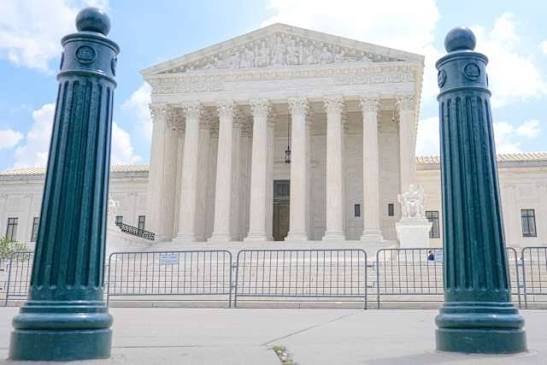
In a monumental constitutional showdown, the United States Supreme Court has delivered a definitive ruling. This highly anticipated decision fundamentally shapes the future of American immigration law. Moving decisively, the conservative-majority bench voted to uphold birthright citizenship across the nation. Therefore, the landmark ruling effectively strikes down the Trump administration’s sweeping executive order.
Writing for the majority, the court affirmed that the executive branch lacks unilateral authority. Specifically, it cannot alter the foundational text of the Constitution. Consequently, children born on American soil will continue to automatically receive full citizenship rights, regardless of their parents’ legal status.
The Constitutional Pillar: Protecting the 14th Amendment
The legal battle centered directly on the interpretation of Section 1 of the 14th Amendment. The administration had argued that the phrase “subject to the jurisdiction thereof” was originally intended to exclude certain groups. Specifically, they aimed to exclude the children of undocumented immigrants. However, the high court fiercely rejected this narrow historical argument.
Instead, the judicial review firmly established that executive policies cannot override clear constitutional protections:
- The Core Ruling: The court ruled that birthright citizenship is an absolute constitutional guarantee. Thus, it cannot be modified or erased by an executive order.
- The Legislative Barrier: Justices emphasized that any fundamental shift requires a formal constitutional amendment. Consequently, Congress must pass it, and the states must ratify it.
- Immediate Legal Halts: The decision immediately dissolves several pending federal restrictions. For example, it halts new passport processing rules at border hospitals.
Executive Order Seeks to End Birthright Citizenship 📄 -> Coordinated Legal Challenges Filed ⚖️ -> Supreme Court Reviews 14th Amendment 🏛️ -> Executive Policy Struck Down ❌
The Vote Split and Majority Reasoning
While the decision directly thwarts a core pillar of the administration’s hardline immigration agenda, the final opinion showcased an unexpected cross-ideological consensus. Legal analysts note that the majority opinion relied heavily on strict textualism. Furthermore, justices utilized deep judicial precedent to protect the status quo.
| Judicial Grouping | Voting Alignment | Core Institutional Argument |
|---|---|---|
| Liberal Block & Moderate Conservatives | Voted to uphold birthright citizenship | The text of the 14th Amendment is unambiguous. Therefore, changing citizenship rules requires a constitutional amendment. |
| Dissenting Justices | Voted to sustain executive discretion | Argued that the executive branch holds broad inherent powers. Thus, it should regulate national sovereignty and border jurisdiction. |
The majority opinion firmly noted that upending over a century of legal tradition would inject unprecedented chaos. Specifically, it would disrupt the nation’s civil infrastructure. It concluded that the court’s duty is to defend the plain language of the Constitution, rather than accommodate shifting political goals.
Severe Blow to the Administration’s Border Blueprint
Consequently, the decision represents a massive political setback for the White House’s immigration team. The administration had planned to use the executive order as a foundational anchor. Indeed, they hoped to establish a broader strategy aimed at curbing illegal immigration.
Following the release of the opinion, administration officials expressed deep disappointment with the judicial outcome. However, they vowed to continue exploring alternative legislative pathways. They still seek to address what they describe as systematic loopholes in the immigration system.
“We believe the court missed a historic opportunity to clarify the true scope of national jurisdiction,” a White House spokesperson stated. “However, we will continue to use every lawful tool at our disposal to secure our borders and protect American sovereignty.”
Long-Term Impact on American Civil Infrastructure
Ultimately, the decision provides immense relief to millions of mixed-status families. Additionally, civil rights organizations across the United States celebrated the outcome. By reaffirming that citizenship by birth remains completely untouchable by the executive branch, the Supreme Court has preserved the baseline framework of American civil identity. Moving forward, the ruling sets an incredibly high legal bar. This ensures that any future attempts to alter these foundational rights must pass through Congress rather than the Oval Office.



More