China Micro Drone Miniaturization Achieves 0.3-Gram Mosquito-Sized Bionic Prototype

Md.Moshail Ahmed
August 14, 2026
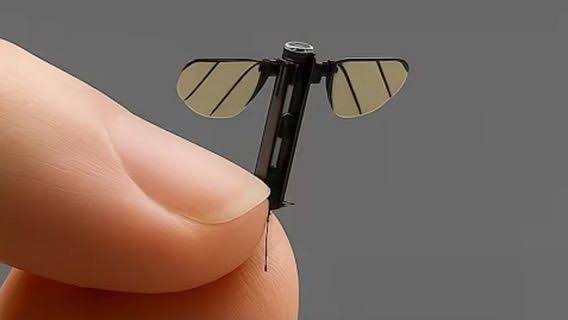
Notably, China micro drone miniaturization reached a major technical milestone after researchers at the National University of Defense Technology (NUDT) in Hunan unveiled a mosquito-sized bionic drone. Specifically, state-run military broadcaster CCTV-7 featured the 2-centimeter-long micro air vehicle (MAV), which weighs a featherlight 0.3 grams. In addition, the insect-like prototype incorporates flapping wings, ultra-thin legs, micro-actuators, and onboard sensors within a tiny frame. As a result, the development showcases rapid progress in sub-gram robotics, sparking intense global discussion regarding the future of covert battlefield surveillance.
How China Micro Drone Miniaturization Reached Insect Scale
In fact, designing a flying machine that weighs under a single gram presents extreme physical and mechanical engineering challenges. To achieve flight, the NUDT research team replaced conventional motor-driven propellers with ultra-lightweight leaf-shaped wings that flap up to 500 times per second. Furthermore, three hair-thin legs allow the device to land and perch silently on walls or foliage. Meanwhile, researchers demonstrated a four-wing variant that operators can control via a smartphone application in laboratory settings.
Micro-Robotics Engineering & Operational Pipeline
(Structural progression from laboratory prototype to potential battlefield utility)
↓
Bionic Biomimicry Architecture
(Engineers adapt flapping-wing flight dynamics to replace heavy quadcopter motors)
↓
Sub-Gram Component Integration
(NUDT researchers combine micro-actuators, power cells, and tiny sensors)
↓
Laboratory Test Flight & Control
(Demonstration shows hover stability and smartphone-guided navigation)
↓
Technical Bottleneck Evaluation
(Engineers address power storage, wind resistance, and signal transmission limits)
Consequently, defense analysts consider the prototype a significant technical leap in biomimetic systems and sub-gram electronics.
“Miniature bionic robots like this one are especially suited to information reconnaissance and special missions on the battlefield.”
— Liang Hexiang, NUDT student and project researcher, statement on CCTV-7
Lab Breakthroughs vs. Battlefield Realities
However, defense experts emphasize that a major gap remains between laboratory prototypes and operational military assets. Indeed, sub-gram drones face brutal physical limits regarding battery life, communication range, and environmental sensitivity. For instance, minor air currents or indoor HVAC drafts can easily knock a 0.3-gram drone off course. In contrast, fielded tactical micro-drones like the 33-gram Teledyne FLIR Black Hornet sacrifice extreme miniaturization to deliver 25 minutes of flight time, HD thermal video, and wind tolerance.
| Feature / Metric | NUDT Mosquito Prototype | Western Lab Benchmarks (e.g., Harvard RoboBee) | Fielded Tactical MAVs (e.g., Black Hornet) |
| Focus Keyword Context | China Micro Drone Miniaturization | Western Research Labs | Fielded Military Hardware |
| Total Mass | ~0.3 grams | ~0.1 grams (80 mg) | ~33 grams |
| Propulsion System | Flapping bionic wings (500 Hz) | Piezoelectric artificial muscles | Micro-helicopter rotors |
| Operational Limits | Brief indoor flight; wind-sensitive | Tethered/controlled lab environment | 25-minute flight; weather-hardened |
| Primary Function | Experimental bionic MAV | Micro-scale robotics research | Encrypted reconnaissance & thermal imagery |
Ultimately, while Western research institutions like Harvard University built early sub-gram flyers like the 0.1-gram RoboBee, NUDT’s demonstration proves that the global race for ultra-miniaturized surveillance technology continues to accelerate rapidly.
Sources
- South China Morning Post / Euronews – Chinese military robotics lab creates mosquito-sized microdrone for covert operations
- The Independent – China builds mosquito-sized spy drone
- TechEBlog – China Develops Mosquito-Sized Drone No Larger Than a Fingernail
- DroneLife – China’s Mosquito-Sized Drone: Science Fiction Becomes Reality



More