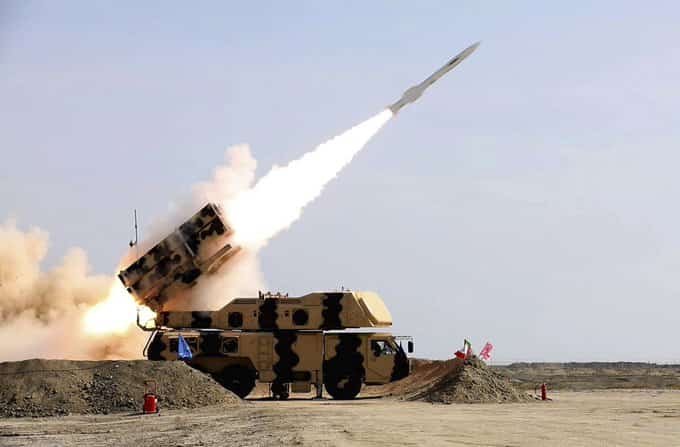
US Strikes Iran Tanker Attack Escalates: 10 Military Targets Destroyed, IRGC Fires Back at Kuwait and Bahrain

Jubayer Alam
June 28, 2026
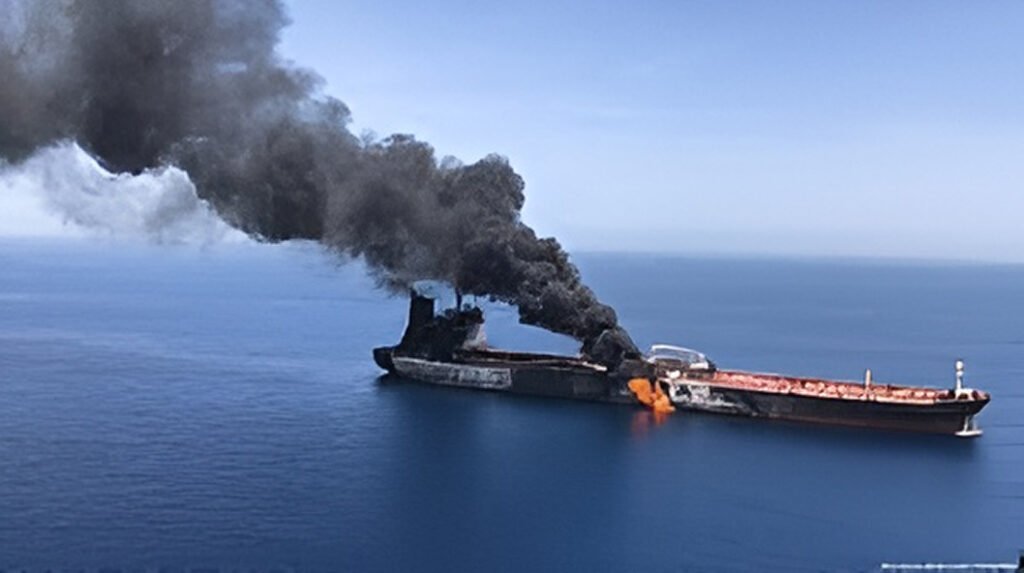
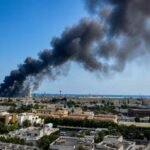
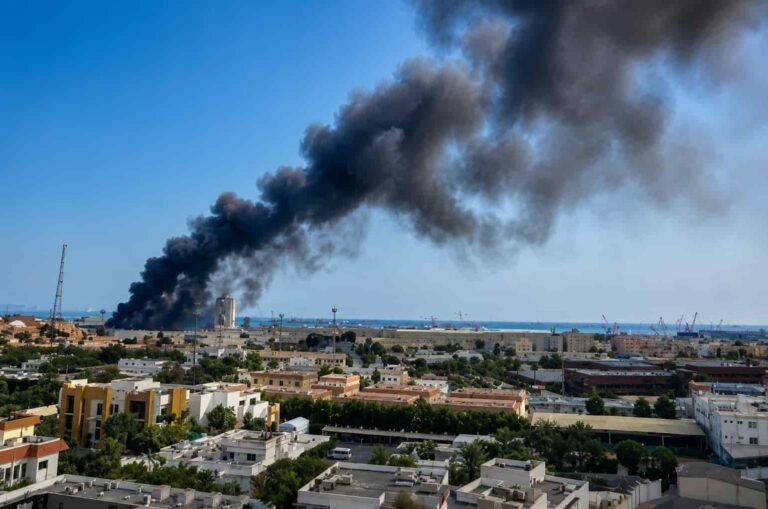
The fragile ceasefire in the Middle East faces total collapse today following a massive military escalation. The latest US strikes Iran drone attack tanker crisis erupted after an Iranian one-way attack drone struck the Panama-flagged oil tanker M/T Kiku at 4:30 a.m. ET on Saturday, June 27. Significantly, this represents the second commercial vessel that Iranian forces have hit in under 48 hours.
In a public statement, US Central Command (CENTCOM) noted, “Iran was given a chance to honor the ceasefire agreement but elected not to when its forces launched a one-way attack drone that hit M/T Kiku this morning.” Consequently, President Donald Trump authorized three successive waves of devastating military responses over the weekend.
(Alt text: U.S. Navy aircraft launch retaliatory operations during the US strikes Iran drone attack tanker escalation)
The Catalyst: Why the M/T Kiku Was Targeted
To begin with, the M/T Kiku was carrying more than two million barrels of Qatari crude oil headed to the port of Fujairah in the United Arab Emirates. Specifically, the vessel was sailing the U.S.-backed Omani coastal corridor when the drone struck its bridge. Fortunately, the bridge sustained damage but all crew members remain safe. Additionally, authorities reported no environmental damage or oil spills in the corridor.
Importantly, this tanker attack came less than 36 hours after an Iranian drone hit the Singapore-flagged M/V Ever Lovely on Thursday. That initial incident triggered the first round of U.S. retaliatory strikes on Friday. As a result, in under two days, Iran has struck two commercial vessels in the Strait of Hormuz. In response, the United States has launched extensive counter-operations to restore deterrence.
Read our previous report: U.S. Strikes Iran After Ever Lovely Drone Attack — Full Report
Inside the Counter-Operations: What CENTCOM Destroyed
According to defense officials, Sunday’s retaliatory waves represent the most comprehensive American military operation since the signing of the Islamabad Memorandum of Understanding (MOU). Specifically, the strike package successfully hit 10 distinct Iranian military sites.
Furthermore, US military aircraft aggressively targeted and eliminated:
- Surveillance Infrastructure: Blinding Iran’s maritime monitoring capabilities along the coastline.
- Communication Systems: Disrupting the Islamic Revolutionary Guard Corps (IRGC) command and control networks.
- Air Defence Sites: Degrading Iran’s ability to protect its coastal military installations.
- Drone Storage Facilities: Destroying the exact weapon types used in both recent tanker attacks.
- Minelayer Capabilities: Preventing Iran from resetting its aggressive sea-mining campaign.
Particularly, the targeting of minelayer capabilities remains highly significant. Previously, Iran laid sea mines throughout the Strait of Hormuz after the war began on February 28, blocking commercial traffic for months. Therefore, by striking these assets during the US strikes Iran drone attack tanker campaign, CENTCOM sent a direct message: the United States will not allow Iran to re-mine the corridor.
Presently, explosions continue to rock Sirik in southern Iran, which serves as a key IRGC naval hub. Nevertheless, CENTCOM confirmed that commercial vessel transits through the Strait of Hormuz operationally continue.
Iran’s Retaliation: Missiles Hit Kuwait and Bahrain
In response, Iran launched its most geographically expansive retaliation since the ceasefire was signed. Specifically, the IRGC launched a joint missile and drone operation between 2:00 a.m. and 3:00 a.m. local time on Sunday, targeting two major Western military hubs.
- Ali Al Salem Air Base — Located in Kuwait.
- U.S. Fifth Fleet Headquarters — Located at Port Salman in Bahrain.
Immediately following the attacks, the IRGC claimed it “destroyed eight important infrastructures of the U.S. army” across both international sites. Consequently, Bahrain’s Ministry of Foreign Affairs condemned the attacks as a “deliberate and repeated pattern” against its sovereignty. Accordingly, they called on the UN Security Council to enforce Resolution 2817 of 2026. Meanwhile, Kuwait confirmed its military forces remain on constant alert.
Furthermore, the IRGC issued a direct threat to the entire peace process. Specifically, they stated that “violating the ceasefire is contrary to Clause 1 of the Islamabad Memorandum of Understanding and will result in the complete halt of all diplomatic processes.”
Track the escalating crisis: Iran Drones Hit Bahrain — Worst Escalation Since Peace Deal Signed
Trump Issues Extreme Warning: “Iran Will No Longer Exist”
As the military exchanges continued through Sunday, President Trump escalated his public rhetoric to an unprecedented level. Taking to social media, Trump issued a stark warning regarding the US strikes Iran drone attack tanker timeline.
“United States aircraft just struck Iranian missile and drone storage locations, and coastal radar sites, for violating the Cease Fire Agreement, AGAIN! It is very possible that they will never learn!” Trump posted on Truth Social.
He then added: “There may come a point when we are no longer able to be reasonable, and will be forced to militarily complete the job that we very successfully started. If that happens, the Islamic Republic of Iran will no longer exist!”
Predictably, Iranian state media broadcast the post immediately as proof of American aggression. In response, Tehran’s foreign ministry called it a “direct threat against the sovereignty of a UN member state.” Conversely, U.S. officials maintained that all military actions remain deliberately calibrated to protect freedom of navigation rather than restart an all-out regional war.
(Alt text: Commercial shipping routes impacted by the US strikes Iran drone attack tanker conflict)
Why Every Tanker Route Is Now a Political Battleground
Fundamentally, the tanker attack on the Kiku was not random. Instead, Iran has made its position explicit: any vessel using the U.S.-backed Omani coastal corridor without IRGC authorization is a legitimate military target.
Presently, Washington promotes a southern lane along the Omani coast. However, Tehran wants ships routed through Iranian-controlled northern waters where they intend to charge transit fees. Importantly, Secretary of State Marco Rubio confirmed there is zero support among Gulf states for any Iranian toll on the Strait of Hormuz.
Consequently, the human and economic impact is immediate. For example, marine data firm Windward reported that while the strait remains operationally open with 43 transits recorded, the pace of normalization has slowed dramatically. In fact, at least two commercial tankers have already reversed course after Iran’s warnings.
Furthermore, Iran’s parliament security chief Ebrahim Azizi stated bluntly, “The Strait of Hormuz is governed by Iran. This is not a violation of the ceasefire; it is ceasefire management.” Undeniably, the U.S. and Iran hold fundamentally incompatible positions on this issue, driving every consecutive strike.
Ceasefire and Geneva Talks on the Brink
Ultimately, the military exchanges of the past 72 hours have dealt severe damage to the diplomatic track. Currently, the U.S. and Iran are supposed to be negotiating the future of the Strait of Hormuz, Iran’s nuclear program, and sanctions relief in Geneva. However, the 60-day MOU window now has only 51 days remaining.
Meanwhile, the White House has already sought $87.6 billion from Congress to cover active Iran war costs. This request underscores the immense financial and political pressure mounting on both administrations.
Simultaneously, in Lebanon, the situation remains equally unstable. For instance, Israel continued strikes near Nabatieh al-Fawqa on June 27. Furthermore, Hezbollah has rejected the U.S.-brokered bilateral Lebanon ceasefire, insisting that negotiators must resolve it under the broader Iran-U.S. MOU instead.
Strike-by-Strike Timeline: 72 Hours of Escalation
| Date | Event | Tactical Outcome |
|---|---|---|
| Thu, June 25 | Iran drone hits M/V Ever Lovely (Singapore-flagged). | 3 drones intercepted; 1 hits upper deck. No casualties. |
| Fri, June 26 | US strikes Iran targets near Sirik. | 6 aircraft hit missile/drone storage and coastal radar. |
| Sat, June 27 (4:30 AM ET) | Iran drone hits M/T Kiku (Panama-flagged). | Tanker bridge damaged; 2M barrels of crude endangered. |
| Sat, June 27 (Evening) | Comprehensive US strikes Iran drone attack tanker response. | 10 military targets hit, including minelayers and comms. |
| Sun, June 28 (2–3 AM local) | IRGC fires missiles and drones at regional hubs. | Attacks strike Ali Al Salem (Kuwait) and Fifth Fleet HQ (Bahrain). |
🔗 Related Coverage on Breaking News Today: