Kurds Demand Ocalan Release in Massive Turkey Rallies as Peace Process Faces Critical Crux

Jubayer Alam
June 29, 2026
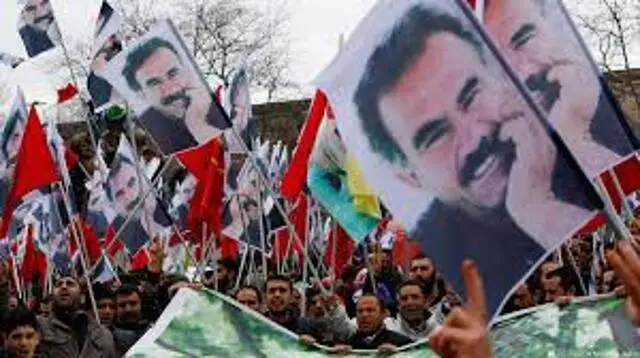
DIYARBAKIR, Turkey — Thousands of Kurdish demonstrators flooded the streets of southeastern Turkey over the weekend. They also filled major metropolitan centers during a highly coordinated wave of protests. Therefore, public pressure on the Turkish government is rising quickly. Currently, the country navigates a highly historic yet delicate political transition. Because of this, Kurds demand Ocalan release to ensure a democratic and comprehensive resolution to the decades-long conflict.
Specifically, protesters gathered in central squares to voice strong support for Abdullah Öcalan. He is the 77-year-old founder of the Kurdistan Workers’ Party (PKK). Turkish security forces originally captured Öcalan back in 1999. Since then, the state has held him on the heavily guarded İmralı prison island. This high-security facility sits isolated in the Sea of Marmara. Consequently, these latest public demonstrations directly challenge the state’s legislative timeline. They also underscore the intense grassroots pressure building within Turkey’s large Kurdish population.
Public Protests Intensify as Kurds Demand Ocalan Release
The pro-Kurdish Peoples’ Equality and Democracy Party (DEM Party) spearheaded the new demonstrations. They worked closely alongside the Democratic Regions Party (DBP). For context, the DEM Party remains the third-largest political bloc in the Turkish Parliament. Previously, administrative restrictions and severe winter weather delays stalled early winter actions. However, organizers moved past these challenges successfully. They expanded their movement into a synchronized, multi-city campaign spanning June 27 and June 28, 2026.
As a result, massive crowds gathered in the Kurdish-majority city of Diyarbakir. Meanwhile, major demonstrations simultaneously hit the eastern city of Van. Protests also erupted in the Mediterranean port city of Mersin and across various neighborhoods in Istanbul. In Diyarbakir, demonstrators raised flags proudly. In addition, they held large portraits of the jailed leader. They also chanted rhythmic slogans in Kurdish, including “Serok Apo” (Leader Apo).
Furthermore, DEM Party leaders frame this issue clearly. They argue that the release of Öcalan is not merely a humanitarian gesture. Instead, they view it as an absolute political necessity for regional stability. During a “Freedom Rally Declaration” event, DEM Party Co-chair Tuncer Bakırhan spoke out. He emphasized that any permanent end to hostilities requires direct participation from the PKK founder. Kurdish political representatives strongly agree with this stance. Consequently, they argue that maintaining Öcalan’s strict isolation harms collective trust. This trust remains necessary to finalize a domestic peace pact.
The Evolving Path of the Ankara-PKK Peace Process (2024–2026)
These widespread rallies occur during an unprecedented shift in Turkish-Kurdish relations. For example, the current peace initiative began unexpectedly in October 2024. Nationalist Movement Party (MHP) leader Devlet Bahçeli shocked the nation at that time. He is a staunch right-wing ally of President Recep Tayyip Erdoğan. Surprisingly, Bahçeli invited Öcalan to address the Turkish parliament. He suggested that the state could offer the jailed leader a conditional release. However, Öcalan first had to command his followers to completely disarm and dissolve their organization.
Following that initial invitation, the peace process advanced rapidly. It moved through several historic milestones over the next two years:
- February 2025: First, Öcalan issued an official statement from his prison cell. He instructed the PKK leadership to lay down its weapons. He also told them to transition fully into a political entity.
- May 2025: Subsequently, the PKK convened an extraordinary congress. Members formally voted to disband their armed wings. They also completely renounced their forty-year armed struggle against Ankara.
- July 2025: Next, a highly symbolic ceremony took place in Iraqi Kurdistan. Approximately 30 prominent PKK fighters laid down and burned their weapons before international observers.
- October 2025: Finally, the PKK high command announced a total withdrawal. They successfully removed all remaining armed personnel from inside Turkish territory.
The formal cessation of this insurgency represents a massive security triumph for Ankara. The conflict had claimed over 50,000 lives since 1984. However, the end of fighting leaves a complex political vacuum. Because of this, Kurdish activists stress an important point. They argue that disarmament must not lead back to state-sponsored political repression. Consequently, everyday Kurds demand Ocalan release now. They believe his freedom will ensure their political rights and language freedoms. It will also help protect their distinct cultural identity under Turkey’s constitutional framework.
Understanding the “Right to Hope” Legal Battle
Beyond immediate domestic political calculations, international human rights law anchors this movement. Specifically, global laws protect the demand for Öcalan’s freedom. Therefore, pro-Kurdish organizations and international legal advocates frequently point to the European Court of Human Rights (ECHR). They emphasize its landmark 2014 ruling, Öcalan v. Turkey No. 2.
In that case, the ECHR determined an important legal standard. It ruled that an aggravated life sentence without any realistic prospect of review violates international law. Specifically, it violates Article 3 of the European Convention on Human Rights. This article strictly prohibits inhuman or degrading treatment. Today, legal experts call this doctrine the “Right to Hope.” It stipulates that every prisoner must possess a clear judicial mechanism. This mechanism must evaluate rehabilitation and potential release after a designated minimum period.
“Imprisoning an individual permanently without the right to hope for review breaks the human spirit. Furthermore, it violates basic international standards.”
European legal watchdogs have repeatedly shared this warning with Ankara. Consequently, the Council of Europe’s Committee of Ministers took action. This body supervises the execution of ECHR judgments. It explicitly rebuked Ankara in September 2025 for failing to enact legislative reforms. Therefore, the committee set a strict deadline of June 2026. They demanded that Turkey provide comprehensive updates regarding its compliance with the “Right to Hope” framework.
Naturally, this international pressure emboldened Kurdish organizers. Dozens of global figures recently dispatched a third joint appeal to the Committee of Ministers. This group included several prominent Nobel laureates. In their letter, the signatories urged the body to hold Turkey accountable. Furthermore, they asserted that releasing Öcalan is vital. Letting him participate freely in negotiations represents the fastest route to stabilizing the region.
Erdogan and Parliament Prepare a New Legislative Framework
In response to growing pressure, President Recep Tayyip Erdoğan announced a pivotal legislative step. He spoke directly to lawmakers from his ruling Justice and Development Party (AK Party) in Ankara. During his speech, Erdoğan confirmed an important development. He stated that the government is actively drafting a comprehensive legal framework. This law aims to accelerate the final, verified disbandment of the PKK.
Clearly, Erdoğan expresses absolute determination to successfully close the chapter on this 40-year insurgency. However, the government faces a steep balancing act. For example, the state security apparatus insists on strict verification protocols. They want to confirm the total elimination of militant infrastructure first. Only then will they grant any significant political concessions. Conversely, the Kurdish political faction demands immediate action. They want tangible confidence-building measures right away.
| Political Actor | Core Strategic Priority | Stance on Abdullah Öcalan |
| Turkish Government (AKP/MHP) | Verified disarmament, state control, and security guarantees. | Rejects immediate release. Instead, favors controlled parole or strict house arrest conditions. |
| Kurdish Representatives (DEM/DBP) | Legal identity recognition, native language rights, and regional amnesty. | Insists that Kurds demand Ocalan release to lead a democratic transition. |
| Council of Europe (ECHR) | Full alignment with continental human rights charters. | Demands Turkey implement a formal review mechanism for life sentences. |
In addition, political analysts note that Erdoğan must tread carefully. He needs to avoid alienating his nationalist coalition partners. These partners fiercely oppose any actions that resemble concessions to the PKK. For context, Turkey, the United States, and the European Union designate the PKK as a terrorist organization. Therefore, observers speculate about the upcoming parliamentary bill. They believe it may finesse Öcalan’s status. For instance, the state might transition him from an isolated island prison to localized house arrest. Alternatively, they could move him to a special consultative facility without granting an outright pardon.
Geopolitical Realities and the Irreversible Path Ahead
Meanwhile, shifting geopolitical realities in the Middle East further accelerate the urgency of this process. Widespread regional volatility marks the current landscape. Despite this chaos, Kurdish political leadership inside Turkey and northern Syria made a deliberate choice. They chose to prioritize structural and institutional integration. Consequently, they avoided entangling themselves in wider regional conflicts.
In fact, jailed leaders like Öcalan have signaled a major shift. They state that the era of cross-border armed insurgencies has permanently concluded. Instead, they are guiding the Kurdish movement toward civil politics. They also focus on local governance and constitutional advocacy. Recently, lawmakers from the DEM party visited Öcalan on İmralı Island. Afterwards, they shared a direct message from him. He warned that there is “no time to lose.” He believes Turkey must solidify this peace process quickly before broader regional uncertainties derail it.
Ultimately, the massive turnouts at the weekend rallies prove an important point. They show that the Kurdish public remains deeply engaged and intensely mobilized. Specifically, they are shifting their tactics from mountain warfare to coordinated urban demonstrations. By doing this, Kurdish advocacy groups utilize democratic spaces to force the state’s hand. Furthermore, public pressure will likely intensify as long as parliament debates the new legal framework.
Therefore, the world continues to watch Ankara closely. International observers recognize that the long-term stability of Turkey depends heavily on this situation. The government must decide how to answer the thousands of voices currently echoing across the country.
Reference Links
- NAMPA / AFP: Jailed Kurdish leader says ‘no time to lose’ for Turkey peace process
- The New Region: Kurds in Turkey await reforms as Erdogan advances peace process
- Al-Monitor: Erdogan says legal framework to speed up militant PKK’s disbandment underway
- Turkish Minute: Pro-Kurdish party plans rallies in 4 cities demanding jailed PKK founder’s release
- NAMPA / AFP: Kurds rally in Turkey’s southeast for freedom for jailed PKK leader
- Kurdpress: The party’s call in support of Abdullah Ocalan
More