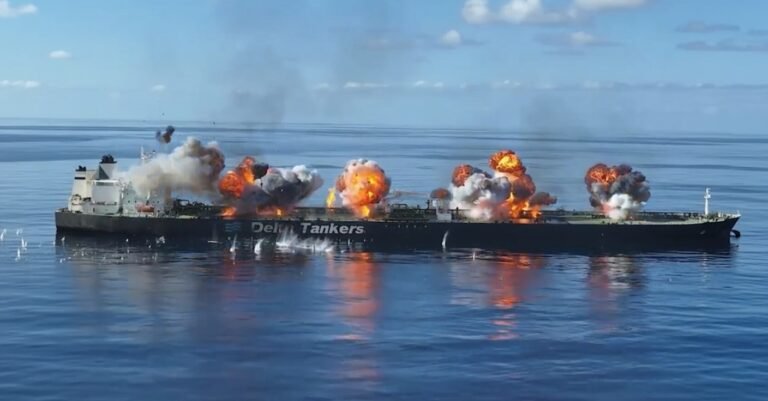
Iranian newspaper Hamshahri Targets Trump on Front Page as US Prepares for Doha Talks

Mike Show
June 30, 2026
Geopolitical friction in the Middle East has reached a scary boiling point. On Tuesday, a state-linked media outlet in Tehran published a highly provocative front-page image. The Iranian newspaper Hamshahri directly targeted US President Donald Trump in its latest print edition. This dangerous move happened during a series of volatile military exchanges. Consequently, these events pushed regional hostilities to a hazardous new threshold while international diplomats scramble to save a fragile peace agreement.
High-Stakes Escalation: Inside the Provocative Front Page
The Iranian newspaper Hamshahri published the controversial image during Tuesday’s morning run. The Tehran Municipality directly owns this widely circulated daily media outlet. Specifically, the front page featured a large photograph of Donald Trump. The editors placed the American president directly inside the crosshairs of a sniper scope.
Directly beneath the graphic, a bold headline sent a chilling message to Washington. It declared: “Revenge is certain.” The publication explicitly attributed this aggressive quote to Iran’s Supreme Leader, Mojtaba Khamenei. In addition, the text featured extensive commentary from several high-ranking Iranian clerics. These officials called for immediate military retaliation against the West over the deaths of multiple Iranian commanders.
Background Context: The Dangerous Cycle of Maritime Attacks
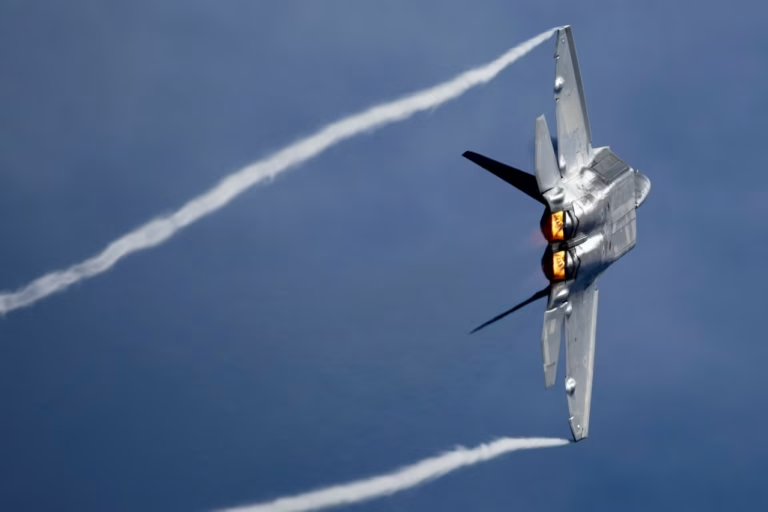
This latest media provocation follows a weekend of intense military flare-ups near vital shipping lanes. US forces recently conducted precision airstrikes against multiple Iranian military assets. Specifically, American jets hit radar sites, air defense networks, and drone storage facilities in southern Iran.
According to US Central Command, these strikes were an immediate retaliatory response. Iran had previously launched a drone attack on a Panama-flagged oil tanker in the Strait of Hormuz. Following the US military action, President Donald Trump issued a fierce warning to Tehran on social media. He stated that the US would respond with overwhelming force if provocations continued. For a full analytical breakdown of how these maritime clashes impact international commerce, visit our Global Logistics Hub.
Strategic Analysis: How Global Stability Is Affected
The aggressive stance taken by the Iranian newspaper Hamshahri reflects a calculated strategy by leadership in Tehran. Political analysts suggest that the hostile cover is designed primarily for domestic viewing. The regime wants to project immense strength to its citizens. However, they do not necessarily want to completely withdraw from back-channel diplomatic talks.
| Country | Recent Military Action | Official Stated Position |
| United States | Conducted precision airstrikes in southern Iran | Warns of total military escalation if attacks continue |
| Iran | Published aggressive media warnings targeting Trump | Demands Western accountability while keeping leverage |
Senior political advisers in Tehran want to maximize their leverage during international meetings. Nevertheless, the danger of an accidental military miscalculation remains incredibly high. Both armed forces are currently on high alert in the region. To explore past diplomatic frameworks, read our International Relations Archive.
Doha Diplomatic Missions: Envoys Descend on Qatar
Meanwhile, high-level international travel highlights the urgency of the current situation. White House officials confirmed that senior US envoys, Steve Witkoff and Jared Kushner, are heading directly to Doha, Qatar. Specifically, their unexpected diplomatic mission aims to address the brewing shipping crisis.
The recent military activity caused a severe slowdown in commercial shipping traffic throughout the strategic waterway. Therefore, Washington has framed these upcoming meetings as a senior-level effort to stabilize global trade routes. To track how these sudden diplomatic developments affect international financial trends, explore our Global Logistics Hub.
Tehran Denies Direct Talks with Washington
The regional layout remains highly complicated due to conflicting official statements. While the United States pushes forward with its diplomatic delegation, Iranian officials have adopted a deeply confrontational stance. Specifically, Tehran has publicly denied any plans for direct negotiations with Washington envoys while in Doha.
Iran continues to fiercely press its sovereignty and shipping claims over the strategic waterway. A diplomat familiar with the situation confirmed that communication channels meant to lower tensions remain active. In addition, the hostile headlines in the Iranian newspaper Hamshahri showcase the deep internal resistance to concessions. Iran’s strict refusal to meet face-to-face with US leadership creates a challenging hurdle for international mediators.
Broad Commercial Impact on the Strait of Hormuz
The primary concern for global economic observers remains the long-term safety of commercial shipping lanes. Because the Strait of Hormuz serves as a vital artery for global energy supplies, any prolonged maritime threat instantly triggers financial shockwaves.
- Shipping Interruptions: Recent brief military skirmishes have already forced commercial vessels to alter their routes.
- Rising Premium Costs: Insurance rates for cargo ships traversing the region have spiked significantly over the past week.
- Supply Chain Delays: Slower traffic through the strategic passage directly delays essential fuel deliveries to European and Asian markets.
Ultimately, this dangerous combination of aggressive media warnings and maritime blockades forces global corporations to prepare for sudden energy spikes. If the upcoming technical teams in Doha fail to secure a reliable maritime truce, consumer prices worldwide could surge before the end of the quarter. Keep tracking how these geopolitical risks reshape international trade by visiting our comprehensive Global Security Dashboard.
Sources
- CNBC, “Trump says U.S. and Iran to hold fresh talks in Qatar on Tuesday following weekend clashes” (June 29, 2026) — https://www.cnbc.com/2026/06/29/trump-us-iran-talks-qatar-hormuz.html
- NPR, “Trump says the U.S. and Iran will meet in Qatar after weekend attacks” (June 29, 2026) — https://www.npr.org/2026/06/29/nx-s1-5874618/us-iran-talks
- The Washington Times, “Trump says U.S. and Iran will resume peace talks in Doha, Qatar” (June 29, 2026) — https://www.washingtontimes.com/news/2026/jun/29/donald-trump-says-us-iran-resume-peace-talks-doha-qatar/
- Al Jazeera, “Trump announces meeting with Iran in Qatar despite military skirmishes” (June 29, 2026) — https://www.aljazeera.com/news/2026/6/29/trump-announces-meeting-with-iran-in-qatar-despite-military-skirmishes
- TIME, “Trump and Iranian Officials Make Conflicting Remarks About Next Steps in Talks After Days of Hostilities” (June 29, 2026) — https://time.com/article/2026/06/29/us-iran-ceasefire-attacks-strikes-peace-talks-mou/
- Al Jazeera (live blog), “Iran war live: Tehran denies Trump’s claim of meeting in Doha” (June 30, 2026) — https://www.aljazeera.com/news/liveblog/2026/6/30/iran-war-live-tehran-denies-trumps-claims-of-meeting-in-doha
- Ynetnews, “’Revenge is certain’: Trump targeted on Iranian front page as US prepares for talks” (June 30, 2026) — https://www.ynetnews.com/article/sygenbwqze
- Iran International, “Tehran daily splashes Trump in crosshairs, vows ‘revenge is certain’” (June 30, 2026) — https://www.iranintl.com/en/202606308341
- Wikipedia, “2025–2026 Iran–United States negotiations” — https://en.wikipedia.org/wiki/2025%E2%80%932026_Iran%E2%80%93United_States_negotiations