IN PICS | Mammoth Clean-Up at Durban Drive-In While About 400 Malawians Wait for Buses

Kole Vo
June 30, 2026
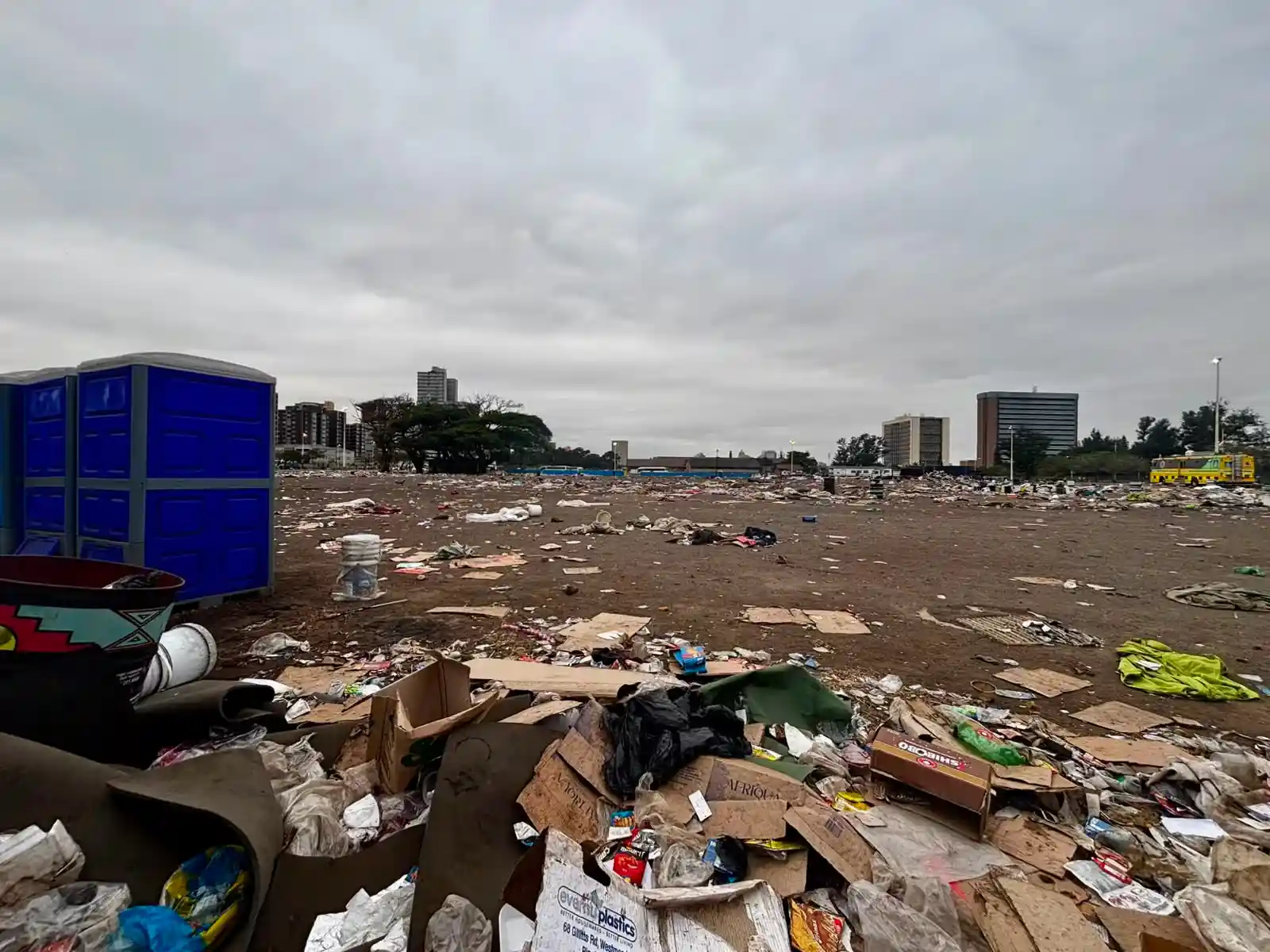
DURBAN, South Africa — Authorities have launched a massive environmental and security operation to clear a temporary shelter after weeks of overcrowding. The mammoth Durban drive-in clean-up began early this morning. Municipal waste management teams and local law enforcement are coordinating the project together. Meanwhile, approximately 400 Malawian nationals continue to camp at the venue. They are currently awaiting humanitarian transport back to their home country.
Originally, the site served as a transitional safety zone. However, it faced severe sanitation challenges over the past month. This rapidly prompted urgent intervention from regional leadership.
Municipal Teams Deploy for Massive Site Restoration
Dozens of waste management trucks arrived at the drive-in site at dawn. Municipal workers immediately began clearing structural debris, temporary tents, and accumulated refuse. Officials expect that the Durban drive-in clean-up will take several days. Consequently, specialized crews are working alongside health inspectors to thoroughly disinfect the perimeter.
Despite the heavy presence of machinery, officials confirmed that the cleaning operation is proceeding peacefully. Furthermore, the displaced families are cooperating nicely. They are actively moving their remaining personal belongings to designated holding areas along the edge of the property.
Delays in Repatriation Rest on Border Logistics
Unfortunately, the humanitarian situation at the site has grown increasingly tense. This is because bureaucratic delays are stalling the arrival of international transport. The stranded group consists largely of women and young children. They have been sleeping in makeshift conditions while waiting for a fleet of buses. These vehicles must transport them through Zimbabwe and into Malawi.
Local relief organizations are providing basic food parcels and medical checks. However, they warn that the current living conditions are completely unsustainable.
“We are working around the clock with the Malawian Consulate to expedite the clearance permits,” a regional coordinator stated on-site. “The Durban drive-in clean-up is a necessary health measure for everyone involved. But the ultimate solution is getting these families onto their buses safely.”
Sanitation Concerns and Community Safety Impact
The city decided to initiate the site clearance following growing complaints from neighbors. Surrounding residential communities and business owners raised alarms regarding public health violations. Because the site lacks permanent ablution blocks or waste disposal infrastructure, the temporary camp quickly became an environmental hazard.
- Logistical Deadlocks: Discrepancies in cross-border documentation have caused major issues. In addition, transit visas through neighboring territories have left the transport buses stranded at the border.
- Emergency Health Interventions: Therefore, local medical teams have established a mobile clinic on the periphery of the clean-up zone. They want to monitor vulnerable individuals for waterborne illnesses effectively.
Broader Socio-Economic Implication for Regional Migration
Socio-political analysts point out that this localized crisis highlights a much bigger issue. Specifically, it shows the broader regional migration challenges currently facing KwaZulu-Natal. Economic shifts and informal residency disputes create sudden pressure. As a result, these factors have increasingly forced municipal governments to manage sudden displacement emergencies without adequate budgetary backing.
Legal frameworks surrounding the protection of vulnerable foreign nationals remain a heavily debated topic. South Africa’s administrative courts struggle with these cases, especially when balancing human rights against municipal zoning codes.
Closing Summary and On-Site Outlook
Fortunately, municipal teams have successfully cleared over half of the targeted zone as the sun sets on the first phase of the Durban drive-in clean-up. While workers are rapidly reclaiming the physical space, the humanitarian clock is ticking for the 400 Malawians still waiting on the tarmac. Finally, consulate representatives have promised that the first convoy of repatriation buses will arrive within the next forty-eight hours.
References & Sources:
- The Witness (South Africa Local News)
- GroundUp News (South Africa)
- Daily Maverick / The Namibian
- SABC News (Official YouTube Live Coverage)