Behind the Granite: The Unfinished Dream of Mount Rushmore’s Hidden Hall of Records

Aderson Aiden
July 3, 2026
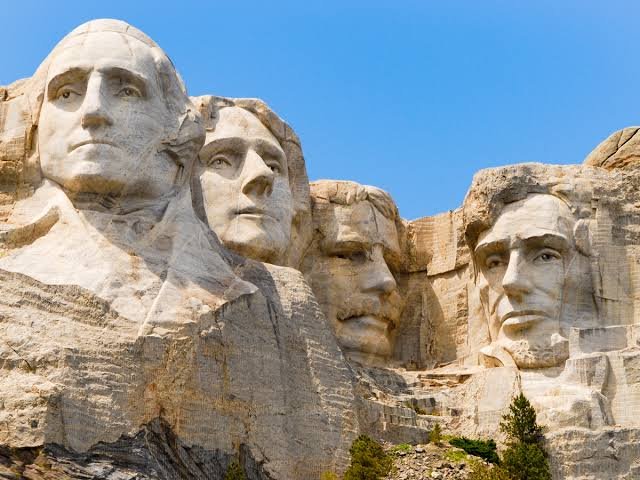
Every year, millions of tourists travel to the Black Hills of South Dakota to gaze at the colossal faces of four American presidents. However, a fascinating secret remains completely hidden from their view. Tucked directly behind the stone hairline of Abraham Lincoln lies a mysterious, unfinished cavern known as the Mount Rushmore Hall of Records.
The secret vault was the brainchild of the monument’s eccentric sculptor, Gutzon Borglum. He envisioned the chamber as a grand, high-tech time capsule designed to explain the purpose of the monument to future civilizations. Yet, due to political battles and sudden budget cuts, the room was left incomplete. Today, it stands as a strictly restricted historical anomaly.
A Grand Vision Foiled by Congressional Budget Cuts
When Borglum initially drafted his blueprints for the massive mountain project in the 1930s, he refused to stop at just sculpting the presidential faces. Instead, he argued that a monument without text was like an unaddressed letter in the postal service. Therefore, he planned to blast a massive 80-by-100-foot repository deep into the granite canyon.
The original architectural plans for the site included several incredibly ambitious infrastructure elements:
- The Grand Stairway: A massive 800-foot granite staircase starting near the sculptor’s studio to lead visitors up into the canyon.
- The Imperial Entryway: A majestic 20-foot-tall doorway guarded by a massive bronze eagle with a stunning 38-foot wingspan.
- The Inscription: A carved message titled “America’s Onward March” greeting visitors above the threshold.
Inside the Real Vault: What Lies Beyond the Restricted Door?
Between 1938 and 1939, construction crews successfully used dynamite to blast a rough, 70-foot-long tunnel into the rock. However, a frustrated Congress found out about the secret project. Lawmakers immediately ordered Borglum to focus all federal funding entirely on finishing the faces. When Borglum passed away in 1941, the project stopped completely.
| Project Phase | Borglum’s Original Proposal | The Final Modern Reality |
| Chamber Access | An 800-foot open staircase for international tourists. | Strictly closed to the public due to extreme safety hazards. |
| Interior Exhibits | Bronze and glass cabinets holding historical artifacts. | A rough-cut, tapered granite tunnel with drill holes visible. |
| Document Security | Public displays of the Constitution and Bill of Rights. | A titanium vault buried under a 1,200-pound granite capstone. |
Decades later, in 1998, the National Park Service partially fulfilled Borglum’s ultimate dream. Officials placed 16 enameled porcelain tablets inside a teakwood box, sealed it within a heavy titanium vault, and buried it beneath the canyon floor. These panels tell the story of the United States, keeping the records safe for thousands of years.
Why You Cannot Visit the Secret Shrine
Despite the internet rumors fueled by Hollywood adventure movies like National Treasure, tourists cannot catch a glimpse of the vault. The National Park Service maintains a strict, zero-tolerance ban on public access to the area behind the sculptures. Because the trail requires navigating dangerous, vertical precipices, unauthorized hiking poses a severe safety risk to the public and the structural integrity of the monument.
“Let us place there, carved high, as close to heaven as we can, the words of our leaders, their faces,” Borglum’s famous quote on the vault’s capstone reads. “Then breathe a prayer that these records will endure until the wind and rain alone shall wear them away.”
The Eternal Message to Future Civilizations
Ultimately, the Mount Rushmore Hall of Records represents a profound human desire to outlast time itself. Geologists estimate that the granite faces will erode by only one inch every 10,000 years, meaning the basic shapes could survive for up to seven million years. By embedding a hidden archive deep within the mountain, the creators ensured that even if modern civilization crumbles, the ideals, documents, and history of the nation will wait silently in the dark, ready for the next era to discover them.