Hungary Sinks Barges in Danube River to Save Paks Nuclear Plant

Md.Moshail Ahmed
August 15, 2026
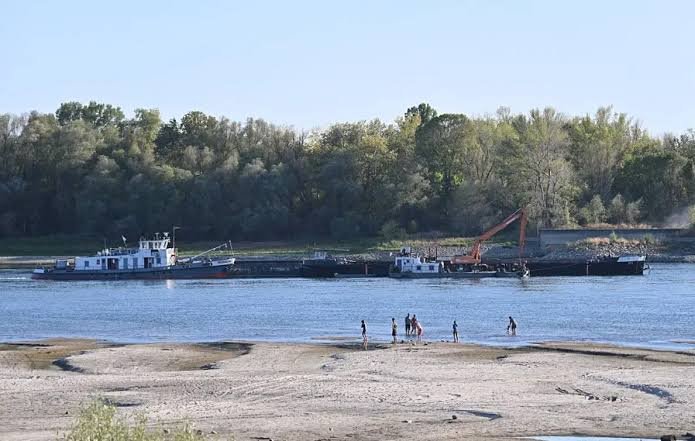
On Saturday, August 15, 2026 , Hungarian emergency crews executed an emergency operation where Hungary Sinks Barges Danube Paks infrastructure to maintain critical reactor cooling. Specifically , reporting byEnergy Connectsconfirms that authorities submerged two 80-meter (260-foot) barges near the Paks Nuclear Power Plant pumping station. In addition , Prime Minister Péter Magyar confirmed that water levels at the intake site already rose by one centimeter within hours of sinking the vessels. As a result , the temporary barrier prevents an immediate shutdown of the facility’s remaining operating turbines. Readers can exploreour European energy policy hubfor broader regional grid analysis.
Hungary Sinks Barges Danube Paks Infrastructure Amid Record Drought
In fact , severe heatwaves across Central Europe pushed the Danube River to historic lows, drastically reducing coolant availability for atomic power plants. Consequently , the Paks facility—which normally supplies 40% to 50% of Hungary’s electricity—reduced output to roughly 485 megawatts, or 25% of its 2,000-megawatt capacity. Furthermore , detailed environmental reporting inThe Independentnoted that neighboring Romania was forced to shut down its Cernavoda nuclear plant earlier in the week due to identical river depletion. However , Hungarian engineers deployed heavy machinery and military helicopters to stabilize local water flows before forced reactor shutdowns occurred.
Emergency Engineering & Water Elevation Pipeline
(Operational breakdown of emergency Danube water management)
↓
Danube River Plunge & Generation Cutback
(Historic drought drops water intake levels, forcing Paks output down to 25% capacity)
↓
Controlled Submersion of Barges
(Crews sink two 80-meter barges to create an immediate 20-centimeter local water rise)
↓
Submerged Weir Construction
(Military helicopters lower two-ton concrete blocks and 5,000 tons of stone onto the riverbed)
↓
Long-Term Water Elevation Barrier
(Underwater sill aims to raise river intake levels by up to one meter within weeks)
Meanwhile , energy analysts emphasize that keeping Paks running remains vital for grid stability. For further coverage on climate impacts, viewour global water crisis guide.
“We are doing this so we don’t have to shut down the two reactors that are still operating. A full shutdown would cost the country at least 50 billion forints ($159 million) a month.”
—Péter Magyar, Prime Minister of Hungary, statement from the Paks site
Regional Energy Strains and Climate Adaptation Pressures
Indeed , regional power grids across Central and Eastern Europe face severe pressure as high temperatures drive electricity demand while reducing river cooling capacity. Therefore , Hungarian military crews are placing 5,000 metric tons of stone and heavy concrete blocks to build a permanent submerged weir across the riverbed.Moreover , reporting from…NVhighlights that the underwater sill will raise water levels by up to one meter once finished. Ultimately , the unprecedented engineering intervention underscores how climate extremes are forcing nations to adapt critical nuclear energy infrastructure.
| Incident Parameter / Metric | Operational Status & Emergency Details |
| Focus Keyword | Hungary Sinks Barges Danube Paks . |
| Location | Paks Nuclear Power Plant, Danube River, Hungary. |
| Immediate Action | Controlled sinking of two 80-meter (260-ft) barges. |
| Water Level Impact | +20 cm short-term rise; up to +1 meter with underwater sill. |
| Current Output | ~485 MW (25% of 2,000 MW total capacity). |
| Financial Risk | Shutdown estimated at 50B HUF ($159M) per month. |
Sources
- Energy Connects / Bloomberg– Hungary Sinks Barges to Lift Danube Near Its Nuclear Plant
- The Independent– Hungary to sink two barges near nuclear plant as river runs dry
- Around Prague– Hungary Sinks Barges Near Paks Nuclear Plant to Save Reactor Cooling
- NV– Hungary sinks barges in Danube to keep its only nuclear power plant running


More