Russia Supplies Iran with “Iskander” Missiles Capable of Carrying Nuclear Warheads

Jubayer Alam
June 29, 2026
TEHRAN, Iran — A major geopolitical earthquake is currently shaking the international community. Specifically, defense intelligence sources recently confirmed a highly alarming development. Russia supplies Iran with Iskander missiles, significantly altering the regional balance of power. Furthermore, these advanced ballistic systems possess a terrifying capability. They can carry conventional high explosives or tactical nuclear warheads. Consequently, this unprecedented military transfer immediately triggered global security alerts.
Currently, the Middle East faces severe instability. In this context, the arrival of advanced Russian weaponry introduces a dangerous new variable. Initially, rumors circulated about military cargo planes flying constantly between Moscow and Tehran. However, satellite imagery and intelligence leaks now verify these claims. The delivery of the 9K720 Iskander system marks a critical escalation. As a result, neighboring countries and Western powers are urgently reassessing their defense strategies.
Why Russia Supplies Iran with Iskander Missiles
For months, military analysts closely monitored the evolving alliance between Moscow and Tehran. Previously, Iran provided Russia with thousands of Shahed attack drones. These drones heavily supported Russian military operations in Eastern Europe. Now, the dynamic has fundamentally shifted. To repay this crucial wartime support, Russia supplies Iran with Iskander missiles. This exchange represents a massive technological leap for the Iranian armed forces.
Furthermore, Moscow needs to maintain strong alliances amid heavy Western sanctions. Therefore, transferring top-tier military technology cements a long-term strategic partnership. In addition, Russia clearly aims to challenge United States influence across the Middle East. By arming Iran with highly capable ballistic missiles, Moscow severely complicates American military planning. Consequently, this weapons deal serves a dual purpose for the Kremlin. It repays a heavy debt and projects Russian power internationally.
Understanding the 9K720 Iskander Missile System
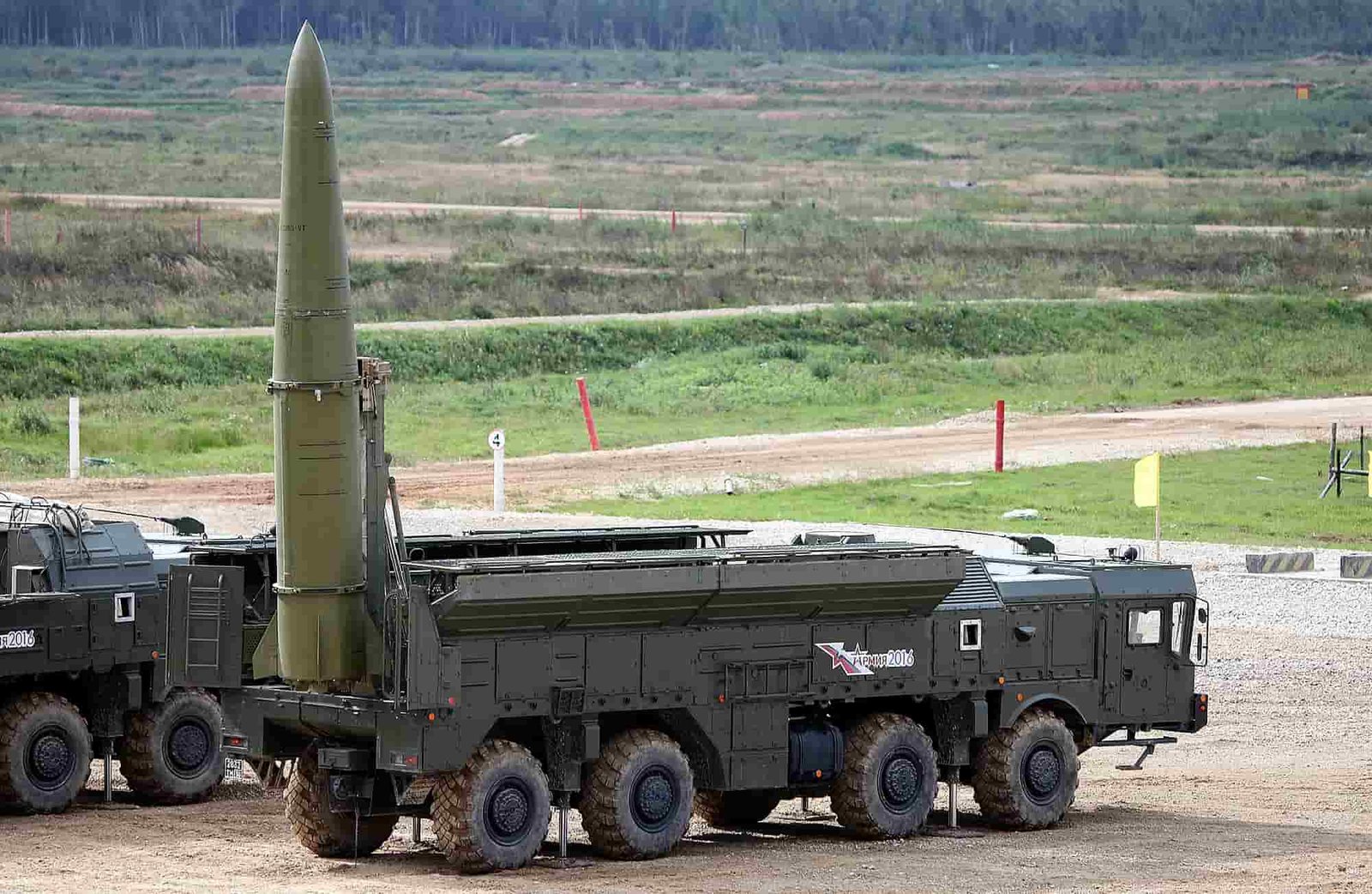
To fully grasp the threat, one must examine the advanced technology. The 9K720 Iskander is a highly mobile short-range ballistic missile (SRBM) system. Originally, Russian engineers designed it to easily evade advanced air defense networks. Therefore, the missile flies on a unique, depressed trajectory. It also performs unpredictable, high-G maneuvers during its terminal flight phase. Because of this, intercepting an incoming Iskander missile is extremely difficult.
Moreover, the entire launch system is highly mobile. Launchers can move quickly, fire their payload, and relocate before enemy radar detects them. This “shoot-and-scoot” capability makes them highly survivable on the modern battlefield. Most importantly, the Iskander boasts a formidable operational range. The standard export variant typically travels up to 280 kilometers. However, some intelligence reports suggest Iran received the domestic Iskander-M variant. This advanced version can accurately strike targets up to 500 kilometers away.
| Specification | Technical Details | Tactical Implication |
| System Name | 9K720 Iskander (NATO: SS-26 Stone) | Recognized globally as a top-tier ballistic system. |
| Operational Range | 280 km (Export) to 500 km (Iskander-M) | Puts critical regional infrastructure at severe risk. |
| Warhead Capacity | 480–700 kg heavy payload | Capable of devastating impact upon a direct hit. |
| Warhead Types | High-explosive, bunker-buster, nuclear | Offers extreme operational flexibility for commanders. |
| Guidance System | GLONASS satellite and terminal optical | Ensures pinpoint accuracy against heavily fortified targets. |
The Severe Threat of Nuclear Warheads
The most alarming aspect of this transfer involves unconventional payloads. Specifically, the headline that Russia supplies Iran with Iskander missiles terrifies experts for one main reason. These specific missiles are dual-capable. This means they can successfully carry and detonate tactical nuclear warheads. While conventional high explosives cause massive damage, a nuclear payload changes everything entirely.
Currently, the International Atomic Energy Agency (IAEA) continues to monitor Iran’s nuclear program. Recently, inspectors warned that Iran possesses highly enriched uranium. They are dangerously close to creating weapons-grade material. Therefore, obtaining a reliable, nuclear-capable delivery system like the Iskander is a catastrophic development. Consequently, Western intelligence agencies are working around the clock. They desperately want to determine if Russia also provided nuclear integration technology.
The Technological Leap for Iran’s Missile Program
Before this transfer, Iran relied heavily on its indigenous missile industry. Over the decades, Tehran developed a massive arsenal of ballistic weapons. For example, they produced the Fateh-110 and the Shahab-3 series. While dangerous, these domestic missiles suffer from notable accuracy issues. Furthermore, they are relatively vulnerable to modern Western anti-missile defenses like the Patriot system.
However, the Russian Iskander completely changes this dynamic. It provides an immediate, massive technological upgrade. Specifically, the Iskander utilizes advanced solid-fuel propulsion. This technology allows for rapid deployment and fast launch sequences. In a combat scenario, every single second counts. Because the Iskander requires very little preparation time, preemptive strikes against the launchers are nearly impossible.
In addition, the guidance systems on the Iskander are far superior to older Iranian tech. They utilize complex digital scene-matching area correlation (DSMAC). Consequently, the missile can actually recognize its target visually in the final moments of flight. This ensures a devastatingly precise impact. Therefore, integrating this Russian technology drastically elevates the lethality of the Iranian military.
Historical Context of the Moscow-Tehran Axis
Historically, the relationship between Russia and Iran experienced many fluctuations. However, recent global events forced them into a tight, mutual embrace. Following the outbreak of intense conflict in 2022, Russia faced unprecedented global isolation. Suddenly, Moscow desperately needed massive amounts of military hardware. In response, Iran stepped up and delivered thousands of unmanned aerial vehicles (UAVs).
Subsequently, this lucrative drone trade established a deep foundation of trust. Following that, military cooperation expanded rapidly between the two capitals.
- First Phase: Russia sent captured Western weapons directly to Iran for reverse engineering.
- Second Phase: Moscow began training Iranian pilots on advanced Su-35 fighter jets.
- Third Phase: Russia provided advanced air defense systems to protect Iranian nuclear sites.
- Final Phase: The current transfer of advanced ballistic offensive capabilities.
This steady progression culminated in the current international crisis. The fact that Russia supplies Iran with Iskander missiles represents the absolute apex of this alliance. It fully transforms a basic transactional relationship into a comprehensive strategic military pact.
Immediate Global Reactions and Condemnation
Unsurprisingly, the international community reacted with immediate and severe outrage. In Washington, the White House issued a blistering public statement. Officials firmly condemned the weapons transfer as a direct threat to global peace. Furthermore, the Pentagon quickly announced emergency deployments of additional air defense batteries to the region.
Meanwhile, in Israel, the government convened an urgent security cabinet meeting. Israeli defense officials view the Iskander as an absolute existential threat. Because the missile can effectively evade standard interception, the Iron Dome system faces a massive challenge. Consequently, Israeli leaders warned publicly that they retain the right to launch preemptive strikes.
“The deployment of Iskander missiles fundamentally shatters the established security architecture. It provides an unstoppable strike option that bypasses traditional air defense networks entirely.”
In addition, European leaders loudly joined the chorus of condemnation. The European Union called the transfer an unacceptable and reckless escalation. They immediately proposed drafting a new, harsher package of economic sanctions. Clearly, the world stands completely united in its extreme concern.
Impact on Middle Eastern Regional Security
The arrival of Iskander missiles in Iranian territory shatters the existing security architecture. Previously, regional neighbors relied heavily on overwhelming air superiority to deter Iranian aggression. However, the Iskander bypasses traditional air power completely. It provides Tehran with a highly lethal, unstoppable strike option from a distance.
Therefore, neighboring Gulf states are currently experiencing extreme anxiety. Countries like Saudi Arabia and the United Arab Emirates remain highly vulnerable. Their critical oil infrastructure sits well within the Iskander’s standard operational range. As a result, these wealthy nations will likely accelerate their own massive arms purchases. This dynamic directly triggers a dangerous, uncontrolled regional arms race.
Moreover, Iran frequently uses proxy proxy groups across the Middle East. Some defense analysts fear Tehran might eventually transfer these missiles to allied groups in Lebanon or Yemen. If this happens, the entire region could rapidly descend into uncontrollable, multi-front warfare.
The Failure of International Arms Embargoes
This crisis also highlights a massive failure in global diplomatic policy. For years, the United Nations maintained strict arms embargoes directly against Iran. These restrictions aimed exactly to prevent the terrifying scenario unfolding today. However, these crucial legal frameworks recently expired. Consequently, nations like Russia face no formal UN prohibitions against selling conventional missiles to Tehran.
This glaring legal loophole massively complicates the diplomatic response. While the United States can easily impose unilateral sanctions, global consensus remains fractured. For instance, Russia holds a permanent veto on the UN Security Council. Therefore, any attempt to pass binding international resolutions will fail instantly. Consequently, Western diplomats find themselves severely restricted. They must rely heavily on economic pressure rather than international law to punish the transfer.
Escalating Economic Sanctions
To aggressively counter this threat, Western powers are mobilizing financial weapons. The United States Treasury Department immediately announced sweeping new sanctions. These targeted measures directly hit the Russian logistics networks responsible for the missile delivery. Furthermore, the sanctions aim to permanently cripple Iranian military procurement fronts.
However, financial experts remain deeply skeptical about the effectiveness of these penalties. Both Russia and Iran operate heavily sanctioned economies already. Over the last several years, they developed sophisticated dark networks to bypass Western financial systems. They frequently trade using alternative currencies or rely on direct bartering. For instance, trading attack drones for ballistic missiles requires no international banking transfers. Therefore, economic sanctions may cause temporary pain, but they cannot magically reverse the missile delivery.
The Strategic Danger of Miscalculation
Perhaps the greatest danger right now involves simple human miscalculation. With nuclear-capable missiles deployed, the strategic margin for error shrinks to zero. In a highly tense crisis, a sudden missile launch could trigger a catastrophic response. If a neighboring nation detects an incoming Iskander, they cannot immediately know the internal payload. It could merely be a conventional explosive. Conversely, it could easily be a tactical nuclear weapon.
Because of this deadly ambiguity, targeted nations might automatically assume the worst. They might launch an overwhelming, apocalyptic retaliatory strike before the missile even lands. Therefore, the mere physical presence of these dual-capable systems drastically lowers the threshold for a wider war. Consequently, military commanders across the Middle East currently remain on hair-trigger alert. The immense psychological pressure on global decision-makers is currently unimaginable.
Conclusion: The Irreversible Path Ahead
In summary, this unprecedented military transfer completely rewrites the modern rules of engagement. The confirmed revelation that Russia supplies Iran with Iskander missiles represents a profound strategic failure for the West. These highly advanced, nuclear-capable weapons give Tehran unprecedented and terrifying striking power. Meanwhile, they perfectly allow Moscow to deeply destabilize a critical global region from afar.
Moving forward, the world must confront this dangerous challenge head-on. Relying on outdated embargoes and fractured diplomacy is simply no longer sufficient. Therefore, allied nations must urgently develop new technological countermeasures to intercept these specific threats. Until then, the dark shadow of the Iskander missile will continue to cover the Middle East. The geopolitical stakes have never been higher, and the consequences of failure are simply unthinkable.
Reference Links
- CSIS Missile Threat: 9K720 Iskander (SS-26) Specifications and History
- Carnegie Endowment for International Peace: How Far Can Russian Arms Help Iran?
- FDD’s Long War Journal: Russia to supply Iran with advanced air defense and missile systems
- Hudson Institute: Russia’s Links with Iran Are Growing Stronger



More